Suga' in My Bowl
Hank Williams
Tuesday 1/29/2019 Show: Randy Weston Memorial

Photo: Randy Weston | © Joyce Jones/ Suga Bowl Photography. Some Rights Reserved. Creative Commons CC-NC-BY-ND. Used with Permission.
Program note: we’re in a new weekly Tuesday night slot from 10-12 midnight!
The next show will air on Tuesday January 29, 2019 from 10:00 PM – 12 Midnight Eastern Standard Time on WBAI, 99.5 FM in the NYC metro area or streaming online at wbai.org. This broadcast features an interview with pianist, composer and pan-Africanist Randy Weston. This program originally aired on September 21, 2010 in celebration of the 50th anniversary of Baba Weston’s release “Uhuru Africa” and his autobiography “arranged by” Willard Jenkins titled “African Rhythms: The Autobiography of Randy Weston.” Baba Weston was the “composer” of this book.
NEA Jazz Master and practitioner of African rhythms Randy Weston has never failed to make the connections between African and American music. His dedication is due in large part to his father, Frank Edward Weston, who told his son that he was, “an African born in America.”
Growing up in Brooklyn, Weston was surrounded by a rich musical community: he knew Max Roach, Cecil Payne, and Duke Jordan; Eddie Heywood lived across the street; Wynton Kelly was a cousin. Most influential of all was Monk, who tutored Weston upon visits to his apartment. Weston began working professionally in R&B bands in the late ’40s before playing in the bebop outfits of Payne and Kenny Dorham. After signing with Riverside in 1954, Weston led his own trios and quartets and attained a prominent reputation as a composer, contributing jazz standards like “Hi-Fly” and “Little Niles” to the repertoire. He also met arranger Melba Liston, who has collaborated with Weston off and on into the ’90s. Weston’s interest in his roots was stimulated by extended stays in Africa; he visited Nigeria in 1961 and 1963, lived in Morocco from 1968 to 1973 following a tour, and has remained fascinated with the music and spiritual values of the continent ever since. In the ’70s, Weston made recordings for Arista-Freedom, Polydor, and CTI while maintaining a peripatetic touring existence — mostly in Europe — returning to Morocco in the mid-’80s.
After contributing seven decades of musical direction and genius, Randy Weston remained one of the world’s foremost pianists and composers today, a true innovator and visionary.
Randy Weston joined the ancestors on September 1, 2018.
[(Bio adapted from Allmusic)
This program is hosted, engineered, produced, and edited by Joyce Jones. Listen for our On the Bandstand segment with NYC metro area appearances of Suga’ guests at the end of the first hour with Associate Producer Hank Williams.
Web Extras:
Watch Weston and the African Rhythms ensemble perform “Blue Moses” in this live clip from approximately 2010.
Watch Weston and saxophonist Billy Harper perform “Blues to Senegal” in this live clip
Hank Williams is assistant producer for Suga’ in My Bowl and produces the weekly “On the Bandstand” segment as well as running the show’s website and blog, where he has reviewed several jazz festivals. His writing has also appeared in Left Turn magazine and American Music Review. He teaches at Lehman College in the City University of New York system.
Tuesday 1/22/2019 Show: Joey DeFrancesco

Photo: Joey DeFrancesco
Program note: we’re in a new weekly Tuesday night slot from 10-12 midnight!
The next show will air on Tuesday January 22, 2019 from 10:00 PM – 12 Midnight Eastern Standard Time on WBAI, 99.5 FM in the NYC metro area or streaming online at wbai.org. This broadcast features an interview with organist, trumpeter, vocalist and tenor saxophonist Joey DeFrancesco.
Raised in Philadelphia, this is where the foundation of his musical roots in Jazz, Blues and other musical art forms were born. To hear Joey DeFrancesco today, his music embodies the traditional art form infused with a distinct modern approach, just part of what makes his music unmistakably his own.
Joey DeFrancesco’s emergence in the 1980s marked the onset of a musical renaissance. Organ jazz had all but gone into hibernation from the mid-’70s to the mid-’80s until DeFrancesco reignited the flame with his vintage Hammond organ and Leslie speaker cabinet. The son of “Papa” John DeFrancesco, an organist himself, the younger DeFrancesco remembers playing as early as four-years-old. Soon after, his father began bringing him to gigs in Philadelphia, sitting in with legendary players like Hank Mobley and Philly Joe Jones, who quickly recognized his talent and enthusiasm. With a natural gift for music, DeFrancesco also swiftly picked up on the trumpet after a touring stint with Miles Davis as one of the two youngest players ever recruited for any of Davis’ ensembles.
DeFrancesco has recorded and/or toured with his own groups as well as numerous renowned artists that include Ray Charles, Diana Krall, Nancy Wilson, George Benson, James Moody, John Scofield, Bobby Hutcherson, Jimmy Cobb, John McLaughlin, Larry Coryell, David Sanborn and many more. The four time Grammy® Award-nominee, with more than 30 recordings as a leader under his belt, has received countless Jazz Journalist Association awards and other accolades worldwide, including being inducted into the inaugural Hammond Organ Hall of Fame in 2014, the Philadelphia Music Walk of Fame in 2016 as well as topping the Critics Polls in DownBeat Magazine eleven times over the past fifteen years and the Readers Polls every year since 2005. DeFrancesco also hosts a weekly program on SiriusXM Radio’s Real Jazz channel titled “Organized.”
In 2018, DeFrancesco toured in support of his Grammy nominated record, Project Freedom, as well as select concert dates celebrating the collaborative recording with iconic recording artist Van Morrison, titled You’re Driving Me Crazy.
DeFrancesco’s latest “In The Key Of The Universe” will be released on March 1, 2019 on Mack Avenue Records.
[(Bio adapted from the Oberlin College website)
This program is hosted, engineered, produced, and edited by Joyce Jones. Listen for our On the Bandstand segment with NYC metro area appearances of Suga’ guests at the end of the first hour with Associate Producer Hank Williams.
Joey DeFrancesco will be at the Jazz Standard on Wednesday February 27 in a release event for “In The Key Of The Universe” with previous Suga’ guest Billy Hart on drums and Troy Roberts on tenor saxophone.
Web Extras:
Watch DeFrancesco perform “Blues for Bobby C” in this live clip
Watch DeFrancesco with guitarist John McLaughlin in this live clip
Hank Williams is assistant producer for Suga’ in My Bowl and produces the weekly “On the Bandstand” segment as well as running the show’s website and blog, where he has reviewed several jazz festivals. His writing has also appeared in Left Turn magazine and American Music Review. He teaches at Lehman College in the City University of New York system.
Tuesday 1/15/2019 Show: Nancy Wilson

Photo: Nancy Wilson | © John Mathew Smith – Date Unknown.
Program note: We’ve moved to a weekly slot on Tuesday nights from 10 PM-Midnight!
The next show will air on Tuesday January 15, 2019 from 10:00 PM – 12 Midnight Eastern Standard Time on WBAI, 99.5 FM in the NYC metro area or streaming online at wbai.org. This broadcast features an interview with song stylist Nancy Wilson. This was the third interview show host Joyce Jones ever conducted, and an abbreviated version originally aired on March 8, 2007, as part of WBAI Radio’s International Working Women’s Day programming.
Born February 20, 1937, in Chillicothe, Ohio, Wilson first attracted notice performing the club circuit in nearby Columbus; she quickly earned a growing reputation among jazz players and fans, and she was recording regularly by the late ’50s, eventually signing to Capitol and issuing LPs including 1959’s Like in Love and Nancy Wilson with Billy May’s Orchestra. Her dates with Shearing, including 1960’s The Swingin’s Mutual, solidified her standing as a talent on the rise, and her subsequent work with Adderley — arguably her finest recordings — further cemented her growing fame and reputation.
In the years to follow, however, Wilson often moved away from jazz, much to the chagrin of purists; she made numerous albums, many of them properly categorized as pop and R&B outings, and toured extensively, appearing with everyone from Nat King Cole and Sarah Vaughan to Ruth Brown and LaVern Baker. She even hosted her own Emmy-winning variety series for NBC, The Nancy Wilson Show, and was a frequent guest performer on other programs; hits of the period included “Tell Me the Truth,” “How Glad I Am,” “Peace of Mind,” and “Now, I’m a Woman.” Regardless of how far afield she traveled, Wilson always maintained her connections to the jazz world, and in the ’80s, she returned to the music with a vengeance, working closely with performers including Hank Jones, Art Farmer, Ramsey Lewis, and Benny Golson. By the 1990s, she was a favorite among the “new adult contemporary” market, her style ideally suited to the format’s penchant for lush, romantic ballads; she also hosted the Jazz Profiles series on National Public Radio.
In the early 2000s, Wilson recorded two albums with Ramsey Lewis for Narada (2002’s Meant to Be and 2003’s Simple Pleasures). Her 2004 album R.S.V.P. (Rare Songs, Very Personal) was a blend of straight-ahead jazz and ballads, similar to her next record, 2006’s Turned to Blue, which, like R.S.V.P., used a different instrumentalist for each track. In 2005, Capitol released a three-part series to pay tribute to Wilson’s contributions to music in the ’50s and ’60s: Guess Who I Saw Today: Nancy Wilson Sings Songs of Lost Love, Save Your Love for Me: Nancy Wilson Sings the Great Blues Ballads, and The Great American Songbook.
Nancy Wilson died at her home on December 13, 2018 after a long illness.
(Bio adapted from Allmusic)
This program is hosted, engineered, produced, and edited by Joyce Jones. Listen for our On the Bandstand segment with NYC metro area appearances of Suga’ guests at the end of the first hour with Associate Producer Hank Williams.
Hank Williams is assistant producer for Suga’ in My Bowl and produces the weekly “On the Bandstand” segment as well as running the show’s website and blog, where he has reviewed several jazz festivals. His writing has also appeared in Left Turn magazine and American Music Review. He teaches at Lehman College in the City University of New York system.
Tuesday 1/8/2019 Show: Gary Bartz/Winter Jazz Fest
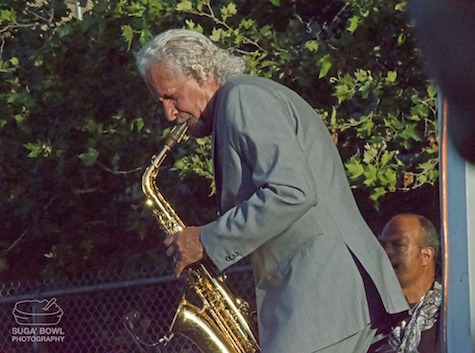
Photo: Gary Bartz | © Joyce Jones/ Suga Bowl Photography. Some Rights Reserved. Creative Commons CC-NC-BY-ND. Used with Permission.
Program note: We’ll be moving to a weekly slot on Tuesday nights from 10-12 midnight starting on January 8!
The next show will air on Tuesday January 8, 2019 from 10:00 PM – 12 Midnight Eastern Standard Time on WBAI, 99.5 FM in the NYC metro area or streaming online at wbai.org. This broadcast features an interview with composer, soprano and alto saxophonist and educator Gary Bartz. This is a rebroadcast that originally aired on December 19, 2010. It also continues our coverage of the 2019 Winter Jazz Fest.
A native of Baltimore, Gary Bartz ventured to New York City to attend the Juilliard School in 1958. At the time, performers such as Thelonius Monk, Ornette Coleman, and Miles Davis were playing at Birdland and the city’s other premiere clubs every night, and Bartz regularly snuck in to see them.
In the 1960s, Bartz joined the Max Roach/Abbey Lincoln Group and the Charles Mingus Jazz Workshop, quickly earning a reputation as the greatest alto saxophonist since Cannonball Adderley. In 1965, after meeting the group at his parents’ nightclub, Bartz joined Art Blakey’s Jazz Messengers and recorded Soulfinger, his recording debut. Around the same time, he began working with McCoy Tyner, and their relationship deepened the influence of John Coltrane on Bartz.
In 1970, Bartz received a call from Miles Davis, who asked Bartz to perform with his band at the historic Isle of Wight Festival. In the same year, Bartz also formed his own group, Ntu Troop, after the Bantu word for “unity.” Ntu blended soul, funk, African folk music, hard bop, and avant-garde jazz on such albums as I’ve Known Rivers and Other Bodies, based on the poetry of Langston Hughes, as well as Music is My Sanctuary, Love Affair, Another Earth, and Home.
Overall, Bartz has recorded more than 40 solo albums and over 200 as a guest artist. More recently, he released Coltrane Rules: Tao of a Music Warrior, Live at the Jazz Standard Volume 1 and Volume 2, and several others, on his own label, OYO, which is named for the Nigerian tribe and the acronym “Own Your Own.” He was also spotlighted in the “Blindfold Test” section of DownBeat magazine in January 2008, and he continues to perform with McCoy Tyner in such cities as Tokyo and Los Angeles.
Bartz is a Professor of “Jazz” Saxophone at Oberlin College and Conservatory.
(Bio adapted from the Oberlin College website)
This program is hosted, engineered, produced, and edited by Joyce Jones. Listen for our On the Bandstand segment with NYC metro area appearances of Suga’ guests at the end of the first hour with Associate Producer Hank Williams.
Gary Bartz will appear as part of the Winter Jazz Festival NYC in celebration of the 50th anniversary celebration of his release of “Another Planet” on Thursday, January 10, along with Pharoah Sanders at Le Poisson Rouge. The 2019 WJF runs through January 12 at several venues in downtown Manhattan and includes a series of talks. See the full lineup and details on their website.
Web Extras:
Watch Bartz in this live clip from 1974
Hank Williams is assistant producer for Suga’ in My Bowl and produces the weekly “On the Bandstand” segment as well as running the show’s website and blog, where he has reviewed several jazz festivals. His writing has also appeared in Left Turn magazine and American Music Review. He teaches at Lehman College in the City University of New York system.
Sunday 1/6/2019 Show: Marcus Strickland

Photo: Marcus Strickland | © Joyce Jones/ Suga Bowl Photography. Some Rights Reserved. Creative Commons CC-NC-BY-ND. Used with Permission.
Program note: We’ll be moving to a weekly slot on Tuesday nights from 10-12 midnight starting on January 8!
The next show will air on Sunday January 6, 2018 from 11:00 PM – 1:00 AM Monday Eastern Standard Time on WBAI, 99.5 FM in the NYC metro area or streaming online at wbai.org. This broadcast features an interview with composer and reeds player (tenor, alto and soprano saxophone and bass clarinet) Marcus Strickland. It also continues our coverage of the 2019 Winter Jazz Fest.
Saxophonist, composer, and bandleader Marcus Strickland is a charter member of the 21st century jazz vanguard. Similar to the torrent of artists that appeared on the jazz landscape in the early ’80s to pull jazz out of the grasp of the Fusion Era, Strickland, his identical twin brother E.J. Strickland (drummer), and artists such as Jeremy Pelt and Robert Glasper breathed new life into jazz early in the new millennium, often erasing the boundaries between it and other musical genres, from hip hop to funk to soul.
During a five-year stint with venerable drummer Roy Haynes, Strickland released two albums on the Fresh Sound New Talent label. At Last was released in 2001, followed by Brotherhood in 2003. Both albums featured precocious peers (Pelt, Glasper, bassist Brandon Owens) playing a lyrical, fiery, contemporary jazz. For the next three years, Strickland toured with artists such as Jeff “Tain” Watts, Haynes, and Dave Douglas, while also holding down dates with his own band. In 2006, he independently released Twi-Life, an adventurous double album on his own label Strick Muzik. It received much critical praise and proclaimed him “Best New Artist” in the JazzTimes Readers’ Poll. In 2007, the Twi-Life group released a live album entitled Open Reel Deck on Strick Muzik. The album featured Lage Lund on guitar, Carlos Henderson on electric bass, and E.J. Strickland on drums, as well as trumpeter Keyon Harrold, the hip-hop-tinged poetry of Malachi, and one track with pianist Jon Cowherd. The album displayed the curious side of Strickland’s compositional skills through funk, hip-hop, Afrobeat, rock, ska, and jungle grooves. Strickland was voted “Rising Star, Soprano Saxophone” in Downbeat Magazine’s 2008 Critic’s Poll. He released two albums in 2009 — Of Song on the Criss Cross label and Idiosyncracies on his label under the new name of SMK. Of Song, with brother E.J., Ben Williams, and David Bryant, was a more straight-ahead set, whereas Idiosyncracies featured Strickland’s increasingly daring compositions. Throughout his career, Strickland has worked with a variety of artists, including Mos Def, Nicholas Payton, Christian McBride, the Charles Tolliver Big Band, and Tom Harrell, among others.
In 2011, the saxophonist independently issued the half-studio/half-live double-disc Triumph of the Heavy, Vols. 1 & 2. One disc offered a concert portrait of his longtime trio with drummer E.J. and bassist Ben Williams, while the studio portion was a quartet with pianist David Bryant added.
Strickland signed to Blue Note in 2015. He contributed a reading of Janet Jackson’s 1986 hit “Let’s Wait Awhile” with vocalist Christie Dashiell. In the spring of 2016, Strickland released Nihil Novi, his full-length debut as a leader for the label. It was produced by Meshell N’Degeocello and featured an entirely new band called Twi-Life (from his 2006 album title) with trumpeter Harrold, bassist Kyle Miles, drummer Charles Haynes, organist Mitch Henry, and keyboardist Masayuki Hirano. The album also featured all-star contributions from vocalist Jean Baylor, bassist Pino Palladino, drummer Chris Dave, guitarist Chris Bruce, and pianist Robert Glasper (the latter played on the Twi-Life album). Two years later, Strickland’s group issued its sophomore Blue Note date, People of the Sun. Self-produced, the band’s personnel shifted a bit with Ghanaian born, U.S.-based percussion master Weedie Braimah. The single “On My Mind” featured guest appearances by Bilal, Pharoahe Monch, and Greg Tate.
(Bio adapted from Allmusic)
This program is hosted, engineered, produced, and edited by Joyce Jones. Listen for our On the Bandstand segment with NYC metro area appearances of Suga’ guests at the end of the first hour with Associate Producer Hank Williams.
Marcus Strickland’s Twi-Life is scheduled to appear as part of the Winter Jazz Festival NYC at the Mercury Lounge during the Friday, January 11, Marathon Night. The 2019 WJF runs from January 4-12 at several venues in downtown Manhattan and includes a series of talks. See the full lineup and details on their website.
Web Extras:
Watch Strickland and Twi-Life in this clip from the 2015v BRIC Jazz Fest
Hank Williams is assistant producer for Suga’ in My Bowl and produces the weekly “On the Bandstand” segment as well as running the show’s website and blog, where he has reviewed several jazz festivals. His writing has also appeared in Left Turn magazine and American Music Review. He teaches at Lehman College in the City University of New York system.
Sunday 12/23/2018 Show: Billy Hart
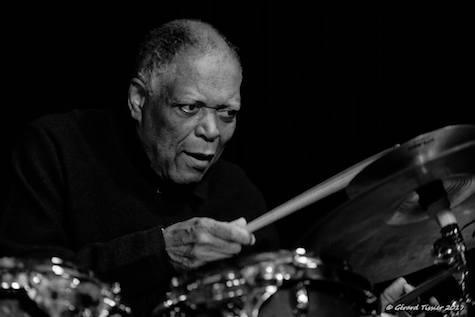
Photo: Billy Hart | © Girard Turner, 2017
The next show will air on Sunday December 23, 2018 from 11:00 PM – 1:00 AM Monday Eastern Standard Time on WBAI, 99.5 FM in the NYC metro area or streaming online at wbai.org. This broadcast features an interview with composer, drummer/percussionist and educator Billy Hart. It also kicks off our coverage of the 2019 Winter Jazz Fest.
Billy Hart was born and raised in Washington, D.C. Jazz was in his blood. His family lived five blocks from the Spotlite Club, where the underage drummer pressed his ear to the window to listen to the Coltrane-Adderley-Evans edition of the Miles Davis Sextet, and the Lee Morgan-Benny Golson edition of Art Blakey and the Jazz Messengers. His father, a mathematician and “an intellectual cat who demanded respect and knew a lot about a lot,” was a staunch Ellington fan; his paternal grandmother had played piano for Marian Anderson and knew William Grant Still. His mother was devoted to Jimmie Lunceford; his maternal grandmother—who bought him his first “good drum set for a gig with a good bebop band”—was a friend of D.C. tenor hero Buck Hill, who turned Hart on to Charlie Parker, and hired him at 17 for nine months of weekend gigs at a spot called Abart’s, where fellow McKinley High School students Reuben Brown and Butch Warren joined him six nights a week as the house rhythm section.
Hart matriculated at Howard University as a mechanical engineering major, but left when Shirley Horn, who had hired him out of Abart’s, took him on the road. Hart credits her with teaching him to play bebop at a simmer, not a roar. He also learned Brazilian rhythms from the source on early ’60s sub jobs at Charlie Byrd’s Showboat Lounge with Antonio Carlos Jobim, João Gilberto and Bola Sete.
Hart apprenticed with Washington, D.C. native sons like Jimmy Cobb, Osie Johnson, Ben Dixon, Harry “Stump” Saunders and George “Dude” Brown. Through local connections, he had backstage access to the Howard Theatre, where he analyzed such master New Orleanian drummers as Idris Muhammad (the Impressions), Clayton Filliard (James Brown), Ed Blackwell and Earl Palmer (Ray Charles). In 1967, he occupied the drum chair in the theater’s house band performing with The Isley Brothers, Sam and Dave, Patti Labelle, Otis Redding and Smokey Robinson and the Miracles among others.
He was also a sideman with Jimmy Smith (1964–1966), and Wes Montgomery (1966–1968). Following Montgomery’s death in 1968, Hart moved to New York, where he recorded with McCoy Tyner, Wayne Shorter, and Joe Zawinul, and played with Eddie Harris, Pharoah Sanders, and Marian McPartland.
In 1969, Hart joined Herbie Hancock’s groundbreaking Mwandishi band and remained there for four years recording three trend-setting albums. From there he joined McCoy Tyner’s band (1973–1974) and also performed with Stan Getz (1974–1977), and Quest (1980s) in addition to extensive freelance playing and recording (including recording with Miles Davis on 1972’s On the Corner).
Howard classmate Marion Brown introduced Hart to Sunny Murray and Rashied Ali. Hart increasingly self-identified as an experimental musician, drawing on their example in a trio with Joe Chambers on piano and Walter Booker on bass. Later, during mid and late ’60s stopovers in Chicago with Jimmy Smith, Wes Montgomery and Eddie Harris, he attended to the “textural, timbral approaches” of AACM drummers Thurman Barker, Steve McCall and Alvin Fielder. He applied those lessons during two years with Pharoah Sanders, a period when, via percussionist Mtume, he received the sobriquet “Jabali” (Swahili for “wisdom”). Hart’s mature tonal personality—advanced grooves drawing on “some knowledge of African and Indian music, and all the American traditions”—emerged during his years with Hancock’s Mwandishi band and subsequent tenure with McCoy Tyner.
Hart drew on all these experiences in conceptualizing Enchance, his debut album as a leader and subsequently, Oshumare (1985), Rah (1987), Amethyst (1993) and Oceans of Time (1997). On each record, he assembled idiosyncratic virtuosos from different circles, each signifying a stream of cutting-edge jazz thought. Functioning more as a facilitator than a stylist, he meshed their distinctive personalities, generating fresh ideas through intense drum dialogue. Each date has a singular quality, as though Hart had conjured a unitary vision out of various strains of the zeitgeist.
Hart currently leads the Billy Hart Quartet featuring Mark Turner, Ethan Iverson and Ben Street. They have recorded three CDs, the most recent, One is the Other, is on ECM Records.
(Bio adapted from The Cookers’s website)
This program is hosted, engineered, produced, and edited by Joyce Jones. Listen for our On the Bandstand segment with NYC metro area appearances of Suga’ guests at the end of the first hour with Associate Producer Hank Williams.
The Billy Hart Quartet is scheduled to appear as part of the Winter Jazz Festival NYC on the ECM Records Stage at Le Poisson Rouge during the Saturday, January 12, Marathon Night.The 2019 WJF runs from January 4-12 at several venues in downtown Manhattan and includes a series of talks. See the full lineup and details on their website.
Web Extras:
Watch a preview of Hart’s All Our Reasons album
Hank Williams is assistant producer for Suga’ in My Bowl and produces the weekly “On the Bandstand” segment as well as running the show’s website and blog, where he has reviewed several jazz festivals. His writing has also appeared in Left Turn magazine and American Music Review. He teaches at Lehman College in the City University of New York system.
Sunday 11/25/2018 Show: Leon Parker
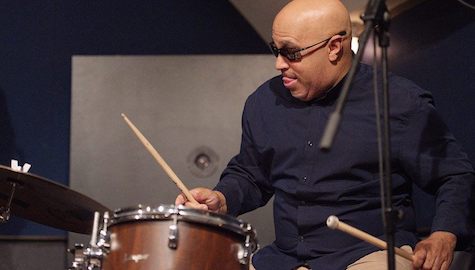
Photo: Leon Parker | © Goffredo Loertscher, Drummersworld.com
The next show will air on Sunday November 25, 2018 from 11:00 PM – 1:00 AM Monday Eastern Standard Time on WBAI, 99.5 FM in the NYC metro area or streaming online at wbai.org. This broadcast features an interview with drummer/percussionist Leon Parker.
New-York born musician Leon Parker is one of the most intriguing musicians of his generation. Drummer, percussionist and body-rhythm pioneer, he constantly explores new sound possibilities, using an infinitive range of colors with an often-limited drumset (consisting sometimes in a unique cymbal). His distinctive groove, he draws from very natural roots, has built him a solid reputation on the jazz scene and beyond.
Leon Parker started drums when he was three, becoming a confirmed jazz musician in early adolescence. After having studied classical percussions, he took lessons with Barry Harris and started performing regularly in New York. Remarked for his unique musical print, he recorded first with Harvie Swartz and played with musicians such as Sheila Jordan and Kenny Barron.
After 10 years building his reputation as a side-man, recording with other musicians (including Dewey Redman, Jacky Terrasson, Brad Mehldau, Peter Bernstein, among others), and leading groups at clubs, he met producer Joel Dorn and recorded his first leader album, “Above and Below”, in 1994, before releasing two other albums for Sony. His 1996-album, “Belief”, and 2 years later “Awakening”, emerged as the result of a long work on sound and deep musical explorations. After the release of his album “The Simple Life” in 2001, he decided to move to France and started to work on a Body-Rhythm method.
While still appearing on numerous albums as a sideman (Including those of Jacky Terrasson and Giovanni Mirabassi), he developed his Body-Rhythm techniques for many years, teaching workshops and leading his own voice and body-rhythm group in Toulouse. This method, called “EmbodiRhythm”, is the basis on which Leon Parker has written new compositions.
(Bio adapted from Parker’s website)
This program is hosted, engineered, produced, and edited by Joyce Jones. Listen for our On the Bandstand segment with NYC metro area appearances of Suga’ guests at the end of the first hour with Associate Producer Hank Williams.
Sixteen years ago, Parker left the U.S. for France to focus on teaching EmbodiRhythm workshops instead of the French Jazz scene.
Leon Parker returns to New York as part of the Aaron Goldberg Trio along with Matt Penman. The Trio will have a run at the Jazz Standard from Thursday, November 29, through Sunday, December 2. Chamber Music America’s (CMA) French-American Jazz Exchange partnered with the Mid Atlantic Arts Foundation and Brooklyn’s National Sawdust to help bring this project to fruition. Tune in for a ticket giveaway during the live broadcast!
Web Extras:
Watch Parker’s drum solo in this live performance of “Perhaps.”
Hank Williams is assistant producer for Suga’ in My Bowl and produces the weekly “On the Bandstand” segment as well as running the show’s website and blog, where he has reviewed several jazz festivals. His writing has also appeared in Left Turn magazine and American Music Review. He teaches at Lehman College in the City University of New York system.
Sunday 11/11/2018 Show: Eddie Henderson
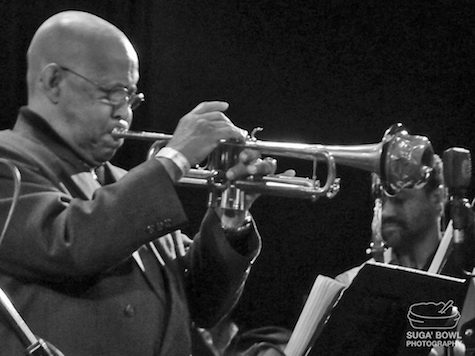
Photo: Eddie Henderson @ 2013 Winter Jazz Fest in New York | © Joyce Jones/ Suga Bowl Photography. Some Rights Reserved. Creative Commons CC-NC-BY-ND. Used with Permission.
The next show will air on Sunday November 11, 2018 from 11:00 PM – 1:00 AM Monday Eastern Standard Time on WBAI, 99.5 FM in the NYC metro area or streaming online at wbai.org. This broadcast features an interview with trumpeter, flugelhorn player, and composer Eddie Henderson who has been a member of two supergroups: Mwandishi and The Cookers.
Jazz trumpeter extraordinaire Eddie Henderson received his first informal lesson on the trumpet at the age of 9 from Louis Armstrong. As a teenager he studied trumpet at the San Francisco Conservatory of Music and performed with the San Francisco Conservatory Symphony Orchestra. In 1957, Eddie met Miles Davis for the first time. Miles, a family friend, admired the strikingly beautiful tone and musicality of Henderson’s trumpet playing and encouraged him to pursue a career in music. As a family friend, Miles has been a major musical influence throughout Henderson’s life. That culminated in May of 2002 with the recording of So What, a tribute to Miles that features songs associated with the legend. As Henderson puts it, “Miles is so very special to me because when I was in high school he stayed in my parent’s house when he came through San Francisco. I was going to the conservatory then studying classical music. I saw him do all these songs live that I recorded on the tribute album.”
Henderson had the good fortune of meeting many famous musicians growing up (including getting those early tips from Satchmo) because his parents were both entertainers. His mother was a dancer at the original Cotton Club and his father a member of the popular singing group Billy Williams and the Charioteers. His stepfather was a doctor to people like Miles, Coltrane and Duke Ellington, so the association with musicians continued. In addition to excelling on his instrument, Eddie excelled academically enough to go to medical school and become a doctor.
From 1968 until the late ‘80s, Henderson mixed music and medicine. He received his first major musical exposure as a member of Herbie Hancock’s trailblazing Mwandishi sextet, an ensemble that also included young innovators such as Bennie Maupin, Julian Priester, Buster Williams and Billy Hart. From 1969 through 1973 they recorded Mwandishi and Crossings for Warner Bros. and Sextant for Columbia. His experiences with Hancock exerted a profound influence on Henderson as reflected in the music on his first two solo albums, Realization and Inside Out, recorded in 1972 and 1973 for Capricorn Records.
After leaving Hancock, the trumpeter worked extensively with Pharoah Sanders, Norman Connors and Art Blakey’s Jazz Messengers. Eddie returned to the San Francisco Bay Area in 1975 where he joined the Latin-jazz group Azteca and fronted his own bands. The expressive rhythmic thrust of Henderson’s jazz/fusion experiences manifested itself on his Blue Note recordings Sunburst and Heritage and in 1977, he broke through with a single on the Billboard charts, “Prance On” (from the album Comin’ Through).
Eddie has also performed with such notables as Dexter Gordon, Roy Haynes, Jackie McLean, Joe Henderson, Elvin Jones, Johnny Griffin, Slide Hampton, Benny Golson, Max Roach and McCoy Tyner.
(Bio adapted from The Cookers’ website)
This program is hosted, engineered, produced, and edited by Joyce Jones. Listen for our On the Bandstand segment with NYC metro area appearances of Suga’ guests at the end of the first hour with Associate Producer Hank Williams.
Web Extras:
Watch Henderson play “Cantaloupe Island” in this 2009 live performance.
Watch Henderson play with Mwandishi in this 1972 live clip.
Hank Williams is assistant producer for Suga’ in My Bowl and produces the weekly “On the Bandstand” segment as well as running the show’s website and blog, where he has reviewed several jazz festivals. His writing has also appeared in Left Turn magazine and American Music Review. He teaches at Lehman College in the City University of New York system.
Sunday 10/28/2018 Show: It Must Schwing! The Blue Note Story
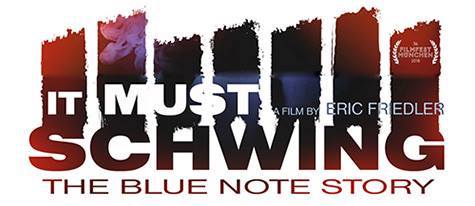
The next show will air on Sunday October 28, 2018 from 11:00 PM – 1:00 AM Monday Eastern Standard Time on WBAI, 99.5 FM in the NYC metro area or streaming online at wbai.org. This broadcast features an interview with Eric Friedler, Director of It Must Schwing! The Blue Note Story, which will be screened at this year’s DOC NYC Film Festival.
In 1939, Alfred Lion and Francis Wolff, two young émigrés from Berlin, founded the legendary jazz label Blue Note Records in New York. The label dedicated itself exclusively to the recording of American jazz music and developed its own unmistakeable recording style and sound.
Blue Note Records discovered and produced an impressive roster of international jazz stars. This included Miles Davis, Herbie Hancock, John Coltrane, Sonny Rollins, Wayne Shorter, Thelonious Monk and Quincy Jones. At a time when Afro-American musicians in the USA were discriminated against and ostracised, Blue Note records respected them as artists and equals. Not only did the label value their talents, it also gave them a much-needed platform. It Must Schwing! The Blue Note Story tells the moving story of two friends, united by a passionate love for jazz, and of their profound belief in equality and freedom for every single human being.
(Bio adapted from the It Must Schwing! website.)
We’ll begin the show with a 2018 BRIC Jazz Festival preview from co-curator Lia Camille Crocket. This year’s festival features film, dance and marathon music nights from October 13-20 at BRIC’s downtown Brooklyn location.
This program is hosted, engineered, produced, and edited by Joyce Jones. Listen for our On the Bandstand segment with NYC metro area appearances of Suga’ guests at the end of the first hour with Associate Producer Hank Williams.
It Must Schwing! The Blue Note Story will have its New York premiere on Saturday, November 10, at 4:00 pm at the SVA Theatre in Manhattan as part of the DOC NYC Festival. Details and advance tickets (strongly recommended!) available at the DOC NYC website.
Web Extras:
Watch the trailer.
https://vimeo.com/272222285?fbclid=IwAR3Kyv9DQfuNmZQw1gIVXuMUuC0fIq5NrHTrZSoIMZpDvZLjToL7QPKOd10
Watch Blanchard and the E-Collective perform “Hey Jimi” live in this 2018 clip from Austria.
Hank Williams is assistant producer for Suga’ in My Bowl and produces the weekly “On the Bandstand” segment as well as running the show’s website and blog, where he has reviewed several jazz festivals. His writing has also appeared in Left Turn magazine and American Music Review. He teaches at Lehman College in the City University of New York system.
Sunday 10/14/2018 Show: Terence Blanchard
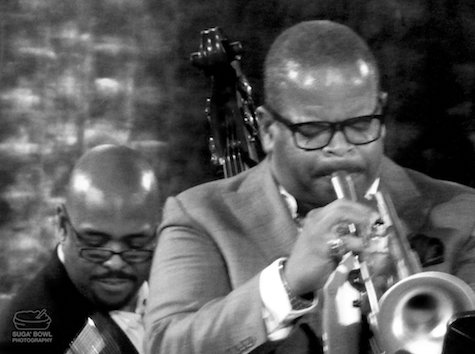
Photo: Terence Blanchard with bassist Christian McBride @ 2012 International Jazz Day at the UN in New York | © Joyce Jones/ Suga Bowl Photography. Some Rights Reserved. Creative Commons CC-NC-BY-ND. Used with Permission.
The next show will air on Sunday October 14, 2018 from 11:00 PM – 1:00 AM Monday Eastern Standard Time on WBAI, 99.5 FM in the NYC metro area or streaming online at wbai.org. This broadcast features trumpeter and composer Terence Blanchard, who will be headlining this year’s BRIC Jazz Festival with his E-Collective ensemble.
From his expansive work composing the scores for Spike Lee films ranging from the documentary 4 Little Girls to the epic Malcolm X, as well as his own discography of recordings such as A Tale of God’s Will (A Requiem for Katrina), 2018 USA Fellow and five-time Grammy-winning trumpeter/composer Terence Blanchard has been a consistent artistic force for making powerful musical statements concerning painful American tragedies – past and present. With his current quintet E-Collective he addresses the staggering cyclical epidemic of gun violence in this country with his new album Live, seven powerful songs recorded live in concert that both reflect the bitter frustration of the conscious masses while also providing a balm of emotional healing. With a title that carries a pointed double meaning, the album is an impassioned continuation of the band’s GRAMMY-nominated 2015 studio recording, Breathless.
The music of Live was symbolically culled from concerts performed at venues in three communities that have experience escalating conflicts between law enforcement and African American citizens: The Dakota in Minneapolis (near where Philando Castile was pulled over and shot by a cop on July 6, 2016); The Bop Stop in Cleveland (near where 12-year-old Tamir Rice was shot by police on November 22, 2014); and the Wyly Theatre in Dallas (near where police officers Lorne Ahrens, Michael Krol, Michael Smith, Brent Thompson and Patricio Zamarripa were assassinated while on duty covering a peaceful Black Lives Matter protest on July 7-8, 2016). The E-Collective’s Live project condemns gun violence of all manner whether against profiled citizens of color or targeted members of law enforcement.
Discussing the origin of E-Collective, Blanchard states, “I didn’t put this group together to be a protest band. We started out wanting to play music to inspire young people that didn’t want to play jazz to play instrumental music on its highest level. In this computer age, we saw too many kids playing music but not trying to learn theory or master their craft. However, while we were on tour in Europe, Mike Brown got shot. Trayvon Martin had already been murdered. And back then it seemed like these shootings were happening every month. That’s when I felt we had to stand up and make a statement with our 2015 album, Breathless [named in honor of Eric Garner who pleaded in vain to a pile of police officers with their knees in his back that he could not breathe]. After touring that music for two years, we couldn’t just let it go. What would we look like as artists doing a record like Breathless then come out with some other shit totally devoid of consciousness?”
Experimental, electric and exotic, E-Collective consists of Terence Blanchard on trumpet, Charles Altura on guitar, Fabian Almazan on piano and synthesizers, Oscar Seaton on drums, and new addition David “DJ” Ginyard on bass.
“This band is an example of the revolution that is taking place,” Blanchard explains. “The pianist Fabian – born in Cuba, raised in Florida – has his own record label, Biophilia, that’s devoted to making the planet green. Most people are trying to make money but that’s not where his focus lies. The bassist David, from Greensboro, South Carolina, is a very talented church boy. He doesn’t preach or wear it on his sleeve yet he walks tall in his confidence everyday. The guitarist Charles looks like a hard rocker but he’s a brilliant Stanford alumnus who studies anthropology – sits at the piano and plays Chopin after a show. And the drummer Oscar, who grew up playing gospel in church in Chicago, has been with Lionel Richie for 16 years. When you look at the conglomeration of us all from different walks of life, look at how we come together and create something harmonious. We are what the promise of America is supposed to be.”
Indeed, throughout the album, Blanchard’s horn does not play the traditional role of a lone voice above the fray. Instead, he plays his horn through an effect that gives it the sound of a group of people standing up for their rights in ‘Marleyan’ harmony.
Terence Oliver Blanchard began playing piano at age 5, and later trumpet beginning in summer camps alongside his childhood friend Wynton Marsalis. While studying jazz at Rutgers University, Blanchard was invited to play with the Lionel Hampton Orchestra in 1982 before Marsalis recommended him as his replacement in Art Blakey’s Jazz Messengers. Following a string of collaborative recordings, he released his first self-titled solo album on Columbia Records in 1991, leading to a string of acclaimed often conceptual works and over forty movie scores, primarily feature films and documentaries for director Spike Lee, including HBO’s 4-hour When the Levees Broke: A Requiem in Four Acts.
Regarding his consistent attachment to artistic works of conscience, Blanchard confesses, “You get to a certain age when you ask, ‘Who’s going to stand up and speak out for us?’ Then you look around and realize that the James Baldwins, Muhammad Alis and Dr. Kings are no longer here…and begin to understand that it falls on you. I’m not trying to say I’m here to try to correct the whole thing, I’m just trying to speak the truth.” In that regard, he cites unimpeachable inspirations. “Max Roach with his ‘Freedom Now Suite,’ John Coltrane playing ‘Alabama,’ even Louis Armstrong talking about what was going on with his people any time he was interviewed. Herbie Hancock & Wayne Shorter who live by their Buddhist philosophy and try to expand the conscience of their communities. I’m standing on all of their shoulders. How dare I come through this life having had the blessing of meeting those men and not take away any of that? Like anybody else, I’d like to play feel good party music but this album is about the reality of where we are.”
(Bio adapted from Blanchard’s website.)
We’ll begin the show with a 2018 BRIC Jazz Festival preview from co-curator Lia Camille Crocket. This year’s festival features film, dance and marathon music nights from October 13-20 at BRIC’s downtown Brooklyn location.
This program is hosted, engineered, produced, and edited by Joyce Jones. Listen for our On the Bandstand segment with NYC metro area appearances of Suga’ guests at the end of the first hour with Associate Producer Hank Williams.
Terence Blanchard will be at the 2018 BRIC Jazz Festival in conversation with Jazz critic Nate Chinen on Wednesday, October 17 and performs with his E-Collective ensemble to close out the Festival on Saturday, October 20.
Web Extras:
Watch Blanchard and the E-Collective perform “Breathless” live in studio.
Watch Blanchard and the E-Collective perform “Hey Jimi” live in this 2018 clip from Austria.
Hank Williams is assistant producer for Suga’ in My Bowl and produces the weekly “On the Bandstand” segment as well as running the show’s website and blog, where he has reviewed several jazz festivals. His writing has also appeared in Left Turn magazine and American Music Review. He teaches at Lehman College in the City University of New York system.
 Suga' in My Bowl