Suga' in My Bowl
jazz
Next show: Sunday 7/8 with Christian McBride on Jazz Fusion
The next show will air on Sunday June 8, 2012 from 11:00pm – 1:00am Monday on WBAI, 99.5 FM in the NYC metro area or streaming online at wbai.org and feature a return visit from previous Suga’ guest Christian McBride. You can hear a 30-second preview below:
In this installment, we’ll have a discussion about the music that is called “Jazz Fusion” with bassist, composer and Grammy winner Christian McBride, who recently won a Grammy for one of his latest two recordings, “The Good Feeling.”
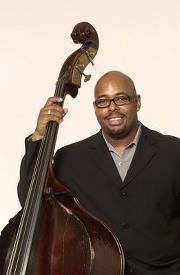 Beginning in 1989, this Philadelphia-born bassist moved to New York City to further his classical studies at the Juilliard School, only to be snatched up by alto saxophonist, Bobby Watson. Since then, McBride’s list of accomplishments have been nothing short of staggering. As a sideman in the jazz world alone, he’s worked with the best of the very best – Freddie Hubbard, Sonny Rollins, J.J. Johnson, Ray Brown, Milt Jackson, McCoy Tyner, Roy Haynes, Chick Corea, Herbie Hancock and Pat Metheny. In the R&B world, he’s not only played with, but also arranged for Isaac Hayes, Chaka Khan, Natalie Cole, Lalah Hathaway, and the one and only Godfather of Soul himself, James Brown. In the pop/rock world, he’s extensively collaborated with Sting, Carly Simon, Don Henley, and Bruce Hornsby. In the hip-hop/neo-soul world, he’s collaborated with the Roots, D’Angelo, and Queen Latifah. In many other specialty projects, he’s worked closely with opera legend Kathleen Battle, bass virtuoso Edgar Meyer, the Shanghai Quartet and the Sonus Quartet.
Away from the bass, Christian has become quite an astute and respected spokesperson for the music. In 1997, he spoke on former President Bill Clinton’s town hall meeting “Racism in the Performing Arts”. In 2000, he was named Artistic Director of the Jazz Aspen Snowmass Summer Sessions. In 2005, he was officially named the co-director of the National Jazz Museum in Harlem. Also in 2005, he was named the second Creative Chair for Jazz of the Los Angeles Philharmonic Association.
Hosted by Arts Producer Joyce Jones
Next show: Sunday, 6/17 with James Mtume on Miles Davis’s electric period
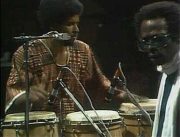 This installment will feature composer, producer and former percussionist with Miles Davis during his “electric period” James Mtume from 1971 to 1975. It will air on Sunday June 17, 2012 at 11:00pm – Monday at 1:00am on WBAI, 99.5 FM in the NYC metro area or streaming online at wbai.org. You can hear a 30-second promo below:
James Mtume was raised in a musical family where his father and uncles formed a band “The Heath Brothers”. Already in the sixties, James Mtume studied percussion and soon after this, he also acquired guitar playing skills. It didn’t take long before he played together with artists like Herbie Hancock, Joe Henderson, Freddie Hubbard and eventually became the percussionist for Miles Davis. In the Miles Davis band, Reggie Lucas played guitar, and it was with Reggie Lucas that James Mtume started a song writing partnership that became the R&B group Mtume.
Mtume recorded as a bandleader for Strata-East before turning to funk in the late ’70s. Mtume’s band included the sassy, sultry vocalist Tawatha Agee, keyboardist Phil Fields, and bassist Ray Johnson. Mtume, the band, had a number one R&B hit with “Juicy Fruit” for Epic Records in 1983 and a number 2 R&B single in 1984 with “You, Me and He”. Mtume recorded for Epic until the late ’80s. Their final Top Ten hit was “Breathless” in 1986. Mtume produced and/or wrote for such artists as Stephanie Mills, Roberta Flack/Donny Hathaway, Phyllis Hyman, Gary Bartz, Sadane, Lou Rawls, Rena Scott, Eddie Henderson in the late ’70s, Levert, Tyrone Brunson, Roy Ayers, Henderson and Tease. Roots and Influences: Miles Davis and Pharoah Sanders. Mtume’s hits for Robert Flack and Donny Hathaway include “The Closer I Get To You” and “Back Together Again”, both platinum sellers and widely viewed “classic songs” in the business.
Hosted by Joyce Jones.
Web extra: Watch this discussion between jazz critic Stanley Crouch and James Mtume on the music of Miles Davis’s electric period. If you have an older computer or slower internet connection, changing the video quality to a lower setting will give you smoother play with fewer interruptions. Youtube explains how to do that here.
Part 1: 14 minutes, 40 seconds
Part 2: 14 minutes, 9 seconds
Next Show: Sunday 6/3 on Betty Carter
This installment will focus on the music and career of Ms. Betty Carter. There will be discussions with Ms. Ora Harris, Ms. Carter’s manager and friend, and pianist Danny Mixon. It will air on Sunday June 6, 2012 at 11:00pm – Monday at 1:00am on WBAI, 99.5 FM in the NYC metro area or streaming online at wbai.org. You can listen to the 30-second promo here.
Betty Carter was born Lillie Mae Jones in Flint, MI, on May 16, 1930 (though some sources list 1929 instead). She grew up in Detroit, where her father worked as a church musical director, and she started studying piano at the Detroit Conservatory of Music as a child. In high school, she got hooked on bebop, and at 16 years old, she sat in with Charlie Parker during the saxophonist’s Detroit gig. She won a talent contest and became a regular on the local club circuit, singing and playing piano, and also performed with the likes of Dizzy Gillespie, Sarah Vaughan, and Billy Eckstine when they passed through Detroit. When Lionel Hampton came to town in 1948, he hired her as a featured vocalist. Initially billed as Lorraine Carter, she was soon dubbed “Betty Bebop” by Hampton, whose more traditional repertoire didn’t always mesh with her imaginative flights of improvisation. In fact, according to legend, Hampton fired Carter seven times in two and a half years, rehiring her each time at the behest of his wife Gladys. Although the Betty Bebop nickname started out as a criticism, it stuck, and eventually Carter grew accustomed to it, enough to permanently alter her stage name.
Carter and Hampton parted ways for good in 1951, and she hit the jazz scene in New York City, singing with several different groups over the next few years. She made a few appearances at the Apollo, performing with bop legends like Dizzy Gillespie and Max Roach, and cut her first album for Columbia in 1955 with pianist Ray Bryant (the aptly titled Meet Betty Carter and Ray Bryant). A 1956 session with Gigi Gryce went unissued until 1980, and in 1958 she cut two albums, I Can’t Help It and Out There, that failed to attract much notice. She spent 1958 and 1959 on the road with Miles Davis, who later recommended her as a duet partner to Ray Charles. Carter signed with ABC-Paramount and recorded The Modern Sound of Betty Carter in 1960, but it wasn’t until she teamed up with Charles in 1961 for the legendary duet album Ray Charles and Betty Carter that she finally caught the public’s ear. A hit with critics and record buyers alike, Ray Charles and Betty Carter spawned a classic single in their sexy duet version of “Baby, It’s Cold Outside,” and even though the album spent years out of print, it only grew in stature as a result.
Oddly, in the wake of her breakthrough success, Carter effectively retired from music for much of the ’60s in order to concentrate on raising her two sons. She did return briefly to recording in 1963 with the Atco album ‘Round Midnight, which proved too challenging for critics expecting the smoothness of her work with Charles, and again in 1965 with the brief United Artists album Inside Betty Carter. Other than those efforts, Carter played only sporadic gigs around New York, and was mostly forgotten.
Unable to interest any record companies, Carter founded her own label, Bet-Car, and released her music on her own for nearly two decades. At the Village Vanguard, a live recording made in 1970, is generally acknowledged as ranking among her best. Carter spent most of the decade touring extensively to help make ends meet, maintaining a trio that evolved into a training ground for young jazz musicians; she preferred to seek and develop new talent as a way of keeping her own music fresh and vital. Over the years, her groups included musicians like pianists Jacky Terrasson, Cyrus Chestnut, Benny Green, John Hicks, Stephen Scott, and Mulgrew Miller; bassists Dave Holland, Buster Williams, Curtis Lundy, and Ira Coleman; and drummers Jack DeJohnette, Lewis Nash, Kenny Washington, Winard Harper, and Greg Hutchinson.
Carter delivered standout performances at the Newport Jazz Festival in both 1977 and 1978, setting her on the road to a comeback. In 1979, she recorded The Audience With Betty Carter, regarded by many as her finest album and even as a landmark of vocal jazz. 1982 brought a live album with orchestra backing, Whatever Happened to Love?, and five years later, she recorded a live duets album with Carmen McRae at San Francisco’s Great American Music Hall. She continued to tour as well, and when Polygram’s reactivated Verve label started signing underappreciated veterans (Abbey Lincoln, Shirley Horn, Nina Simone, etc.), they gave Carter her first major-label record deal since the ’60s. Verve reissued much of her Bet-Car output, giving those records far better distribution than they’d ever enjoyed, and Carter entered the studio to record a brand-new album, Look What I Got, which was released to excellent reviews in 1988. It also won Carter her first Grammy, signaling that critics and audiences alike had finally caught up to her advanced, challenging style.
Over the next few years, Carter continued to turn out acclaimed albums for Verve, winning numerous reader’s polls with recordings like 1990’s Droppin’ Things, 1992’s It’s Not About the Melody, 1994’s live Feed the Fire, and 1996’s I’m Yours, You’re Mine. Additionally, she expanded her interest in developing new jazz talent through her Jazz Ahead program, which began in 1993 and offered young musicians the chance to workshop with her at the Brooklyn Academy of Music. She also gave presentations on jazz to students of all ages, and remained an outspoken critic of the watered-down quality of much contemporary jazz. She performed at the Lincoln Center in 1993, and the following year for President Clinton at the White House; three years later, he presented her with a National Medal of Arts. Carter lost a battle with pancreatic cancer on September 26, 1998, passing away at her home in the Fort Greene section of Brooklyn.
Hosted by Joyce Jones
Next show: Sunday 5/6 with Bobby Sanabria
The next show will air on Sunday 5/6/2012 from 11:00pm – Monday at 1:00am on WBAI, 99.5 FM in the NYC metro area or streaming online at wbai.org. Listen to the 1 minute promo below (may not work in all browsers, especially mobile ones):
This installment of the program will feature an encore presentation of “The Journey: From Africa to the New World Through Cuba, Puerto Rico, The Dominican Republic, Haiti and Beyond” presented by drummer, percussionist, composer, arranger, multicultural warrior educator Bobby Sanabria. Join us as we help continue the important work of WBAI during the Spring Membership Drive. “The Journey” was one of the most popular programs in the last WBAI fund drive, so we’re offering it again. You can help the station (and us) by pledging for the full audio documantary on CDs as a thank you gift here or simply making a donation to the station here.
Bobby, the son of Puerto Rican parents, was born and raised in the “Fort Apache” section of New York  City’s South Bronx. Inspired and encouraged by maestro Tito Puente, another fellow New York-born Puerto Rican, Bobby “got serious” and attended Boston’s Berklee College of Music from 1975 to 1979, obtaining a Bachelor of Music degree and receiving their prestigious Faculty Association Award for his work as an instrumentalist. Since his graduation, Bobby has become a leader in the Afro-Cuban, Brazilian and jazz fields as both a drummer and percussionist, and is recognized as one of the most articulate musician-scholars of la tradición living today, and is a Professor at The New School for Jazz and Contemporary Music.
He has been featured on numerous Grammy-nominated albums, including The Mambo Kings and other movie soundtracks, as well as numerous television and radio work. Bobby was the drummer with the legendary “Father of the Afro-Cuban Jazz movement,” Mario Bauzá’s Afro-Cuban Jazz Orchestra. With them he recorded three CD’s (two of which were Grammy-nominated) which are considered to be definitive works of the Afro-Cuban big-band jazz tradition. Bobby was also featured with the orchestra in two PBS documentaries about Bauzá and also appeared on the Bill Cosby show performing with the orchestra. He also appeared and performed prominently in a PBS documentary on the life of Mongo Santamaria.
Bobby is also an award-winning documentary producer whose films include The Palladium—Where Mambo Was King, shown on BRAVO, and From Mambo to Hip Hop—A South Bronx Tale, shown on PBS; he was a featured interviewee in both films. In 2005, Bobby was voted Percussionist of the Year by the readers of DRUM! magazine. In 2006, he was inducted into the Bronx Walk of Fame and had a street named after him in recognition of the global impact of his work in the arts.
Bobby has been active in the effort to restore the 31 Grammy categories that were removed from awards ceremony. Find out more at http://www.grammywatch.org/.
Hosted by Joyce Jones.
Next show: Sunday 3/18 with Carol Maillard of Sweet Honey in the Rock

This installment will feature singer, actress and one of the founding members for the vocal ensemble Sweet Honey in the Rock: Carol Maillard. It will air on Sunday March 18 2012 at 11:00pm – Monday at 1:00am on WBAI, 99.5 FM in the NYC metro area or streaming online at wbai.org.
Carol Maillard was born and raised in Philadelphia, Pennsylvania. Although she originally attended Catholic University of America on scholarship as a Violin Performance major, she soon began writing music and performing with the Drama Department and eventually changed her major to Theater.
This passion for the stage brought her to the D.C. Black Repertory Company and the beginnings of the vocal ensemble that was to become Sweet Honey In The Rock founded by Bernice Johnson Reagon in 1973 (with Mie, Carol Maillard and Louise Robinson). Carol is an accomplished actress and has performed in film, television and on stage. Her theater credits encompass a wide range of styles from musical comedy and revues to drama and experimental. She has performed on and off Broadway (“Eubie,” “Don’t Get God Started,” “Comin’ Uptown,” “Home,” “It’s So Nice To Be Civilized,” “Beehive,” “Forever My Darling”); with the Negro Ensemble Company (“Home,” “Zooman and the Sign,” “Colored Peoples Time,” “The Great Mac Daddy”); and the New York Shakespeare Festival (“Spunk,” “Caucasian Chalk Circle,” “Under Fire,” “A Photograph…”); also at the Actors Studio (“Hunter”). She can be seen in the feature films “Beloved” and “Thirty Years to Life.” On television, Carol has appeared in “For Colored Girls Who Have Considered Suicide” and “Halleluiah!” ( PBS) ; “Law and Order: SVU” and “Law and Order.”
As a member of Sweet Honey in the Rock, her powerful rendition of Motherless Child arranged for Sweet Honey, is featured in the motion picture, “The Visit” and the Dorothy Height documentary, “We Are Not Vanishing.” Carol was Conceptual Producer for the documentary film on PBS’ American Masters 2005 – “Sweet Honey in the Rock: Raise Your Voice!” Produced and directed by Stanley Nelson (Firelightmedia Films), the film chronicled Sweet Honey’s 30th Anniversary year (2003).
As a vocalist, she has had the privilege to record with Horace Silver, Betty Buckley, and the SYDA Foundations inspirational recording “Sounds of Light.”
(Biography from the Sweet Honey in the Rock website)
Next show: 2/5 with Bobby Sanabria
Audio Archive Update: Our audio archives are now back up and running after moving the sound files to a new storage location. This should be more reliable. If you tried to listen to an archived show recently and it didn’t work, please try again: everything should be fine now. If not, send us a note from the contact page. Thanks!
The next show will air on Sunday 2/5/2012 from 11:00pm – Monday at 1:00am on WBAI, 99.5 FM in the NYC metro area or streaming online at wbai.org. Listen to the 1 minute promo below (may not work in all browsers, especially mobile ones):
This installment of the program will feature “The Journey: From Africa to the New World Through Cuba, Puerto Rico, The Dominican Republic, Haiti and Beyond” presented by drummer, percussionist, composer, arranger, multicultural warrior educator Bobby Sanabria. Join us as we help continue the important work of WBAI during this Winter Membership Drive.
Bobby, the son of Puerto Rican parents, was born and raised in the “Fort Apache” section of New York City’s South Bronx. Inspired and encouraged by maestro Tito Puente, another fellow New York-born Puerto Rican, Bobby “got serious” and attended Boston’s Berklee College of Music from 1975 to 1979, obtaining a Bachelor of Music degree and receiving their prestigious Faculty Association Award for his work as an instrumentalist. Since his graduation, Bobby has become a leader in the Afro-Cuban, Brazilian and jazz fields as both a drummer and percussionist, and is recognized as one of the most articulate musician-scholars of la tradición living today, and is a Professor at The New School for Jazz and Contemporary Music.
He has been featured on numerous Grammy-nominated albums, including The Mambo Kings and other movie soundtracks, as well as numerous television and radio work. Bobby was the drummer with the legendary “Father of the Afro-Cuban Jazz movement,” Mario Bauzá’s Afro-Cuban Jazz Orchestra. With them he recorded three CD’s (two of which were Grammy-nominated) which are considered to be definitive works of the Afro-Cuban big-band jazz tradition. Bobby was also featured with the orchestra in two PBS documentaries about Bauzá and also appeared on the Bill Cosby show performing with the orchestra. He also appeared and performed prominently in a PBS documentary on the life of Mongo Santamaria.
Bobby is also an award-winning documentary producer whose films include The Palladium—Where Mambo Was King, shown on BRAVO, and From Mambo to Hip Hop—A South Bronx Tale, shown on PBS; he was a featured interviewee in both films. In 2005, Bobby was voted Percussionist of the Year by the readers of DRUM! magazine. In 2006, he was inducted into the Bronx Walk of Fame and had a street named after him in recognition of the global impact of his work in the arts.
Bobby has been active in the effort to restore the 31 Grammy categories that were removed from awards ceremony. Find out more at http://www.grammywatch.org/.
Hosted by Joyce Jones.
Next Show: 1/15 on Paris Blues/Romare Bearden
The next show will air on Sunday 1/15/2012 from 11:00pm – Monday at 1:00am on WBAI, 99.5 FM in the NYC metro area or streaming online at wbai.org. Listen to the 40-second promo below (may not work in all browsers, especially mobile ones):
Jazz at Lincoln Center and the Romare Bearden Foundation are presenting the exhibition “Paris Blues Revisited: Romare Bearden, Albert Murray, Sam Shaw” as part of the 100th anniversary celebration of Bearden’s birth.
Designed as a book-on-the-wall, Paris Blues Revisited …presents fine reproductions of collages by Romare Bearden, writing by Albert Murray and photographs by Sam Shaw. Following the Shaw-produced film Paris Blues, these three men decided to improvise their own Paris Blues – a collaborative picture-and-writing book celebrating Paris as well as Duke Ellington, co-composer (with Billy Strayhorn) of the movie’s soundtrack and Louis Armstrong, one of that movie’s stars. That book was never completed. This exhibit shows, for the first time, finished pages, some of them unmistakable masterworks, as well as works-in-progress that make clear the power of jazz to inspire collaborations of long-lasting beauty.
Paris Blues Revisited is curated by Robert G. O’Meally, C. Daniel Dawson and Diedra Harris Kelley, and designed by Florio Design.
This edition of “Suga’ In My Bowl” will host a discussion with Robert G O’Meally, Professor of English at Columbia University and co-curator of exhibitions with Jazz at Lincoln Center and Diedra Harris Kelley, co-director of the Romare Bearden Foundation and niece of Romare Bearden.
Hosted by Arts Producer Joyce Jones.
Next show: Sunday 1/1/12 with Creed Taylor
Happy New Year and Habari Gani Imani! First, a quick update on what the Suga’ team has been up to. If you haven’t been over to our audio archives page yet, jump over and check it out! We’ve uploaded most of the shows that aired in 2011 and are working backwards from there to make older shows available: most of 2010 should be up over the New Year’s weekend. There will also be a few web-only extras: snippets of sound that didn’t quite make the cut for the original show for whatever reason.
The next show will air on New Year’s Day: Sunday 1/1/2012 at 11:00pm – Monday at 1:00am on WBAI, 99.5 FM in the NYC metro area or streaming online at wbai.org. Listen to the 45-second promo below (may not work in all browsers, especially mobile ones):
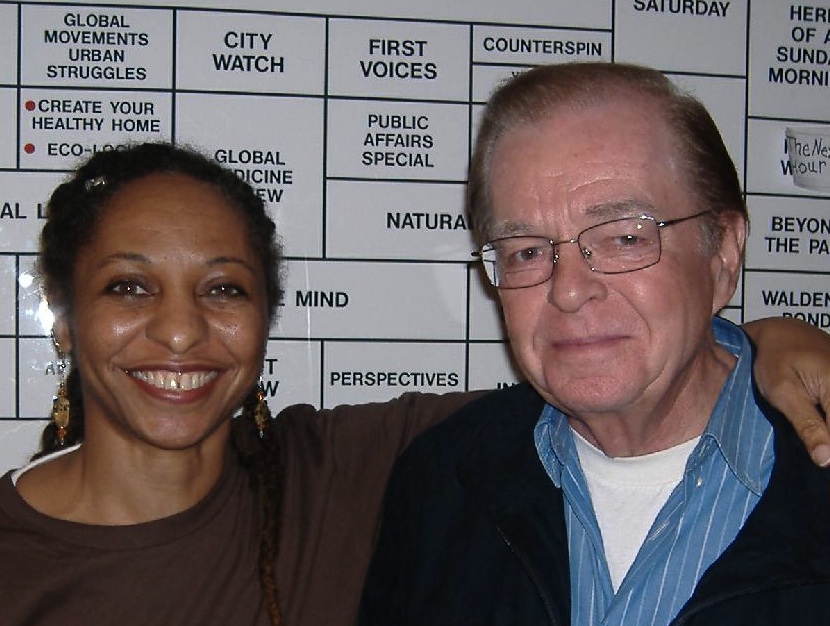 Tune in to hear an interview with Creed Taylor, who revolutionized the respectability and popularity of jazz with CTI Records. In fact, some of the most significant jazz of the last half of the 20th century has been fashioned under Taylor’s guidance and supervision.
This show is a remixed version of one that originally aired as part of WBAI’s fifth Hip Hop Takeover in June 2007 and primarily focused on songs from the CTI Records catalog that have been sampled by hip hop artists.
Taylor has been especially influential in the packaging of music. His records are as much art to see as they are to hear. With heavy, glossy, gatefold covers featuring stark design and striking photography, his records have the sound and feel of something bearing unusual class and great quality.
After earning a degree in psychology in the early 1950s, Taylor played trumpet in clubs around Virginia Beach. He relocated to New York and secured a venerable post as head of artists and repertoire at Bethlehem Records. He produced a wide variety of jazz for Bethlehem before he took a higher profile position with ABC Paramount during the late fifties. At ABC, he produced some jazz and a great many more vocal recordings that enjoyed popular success.
When ABC Records sought to form a jazz subsidiary in 1960, Taylor was recruited to oversee it all. He called the company “Impulse!,” conceived its distinctive black and orange label and spine design, brought in photographer Pete Turner for elegant, vivid cover art and initiated heavy cardboard, gatefold sleeves (to convey substance). Taylor, however, stayed with Impulse for only a few months. But during this short time, he recorded historically significant music by John Coltrane, Gil Evans, Oliver Nelson and Ray Charles.
Taylor jumped ship to accept a lucrative offer to run Verve Records, the jazz label Norman Granz sold to MGM in 1961. Here was a company that had solid name recognition in the jazz community as well as a rich parent company to fund many of Taylor’s lavish goals. Verve’s big budgets and Creed Taylor’s proven ability to turn jazz into hits (starting in 1962 with Stan Getz’s “The Girl From Ipanema”) afforded limitless opportunities to employ the cream of the crop in studio musicians for these records.
In November 1967, Taylor arranged with A&M’s Herb Alpert and Jerry Moss to begin his own organization, CTI Records. The team he took with him were among the finest in the business: engineer Rudy Van Gelder, designer Sam Antupit and, again, photographer Pete Turner. He also developed a small in-house staff of musicians comprised of jazz’s greatest names.
In 1970, Creed Taylor launched CTI as an independent entity. The shift was seen in the switch from the cover’s white backgrounds to black. George Benson made the transition too, staying throughout CTI’s greatest years in the 1970s. Some of the music’s greatest players, including (past Suga’ in My Bowl guest) Freddie Hubbard and Stanley Turrentine, were recruited to CTI and ultimately created some of their most remarkable recordings while under Creed Taylor’s aegis.
(CT’s bio adapted from Doug Payne’s excellent blog entry.)
Hosted by Arts Producer Joyce Jones.
Next show: Sunday, 12/11 on Christian McBride
The next show will air on Sunday 12/11 at 11:00pm – Monday at 1:00am on WBAI, 99.5 FM in the NYC metro area or streaming online at wbai.org and feature bassist Christian McBride.
Tune into this program to hear more about this hard-working bassist, composer and band leader, who was recently nominated for a Grammy for one of his latest two recordings, The Good Feeling.
Beginning in 1989, this Philadelphia-born bassist moved to New York City to further his classical studies at the Juilliard School, only to be snatched up by alto saxophonist, Bobby Watson. Since then, McBride’s list of accomplishments have been nothing short of staggering. As a sideman in the jazz world alone, he’s worked with the best of the very best – Freddie Hubbard, Sonny Rollins, J.J. Johnson, Ray Brown, Milt Jackson, McCoy Tyner, Roy Haynes, Chick Corea, Herbie Hancock and Pat Metheny. In the R&B world, he’s not only played with, but also arranged for Isaac Hayes, Chaka Khan, Natalie Cole, Lalah Hathaway, and the one and only Godfather of Soul himself, James Brown. In the pop/rock world, he’s extensively collaborated with Sting, Carly Simon, Don Henley, and Bruce Hornsby. In the hip-hop/neo-soul world, he’s collaborated with the Roots, D’Angelo, and Queen Latifah. In many other specialty projects, he’s worked closely with opera legend Kathleen Battle, bass virtuoso Edgar Meyer, the Shanghai Quartet and the Sonus Quartet.
Away from the bass, Christian has become quite an astute and respected spokesperson for the music. In 1997, he spoke on former President Bill Clinton’s town hall meeting “Racism in the Performing Arts”. In 2000, he was named Artistic Director of the Jazz Aspen Snowmass Summer Sessions. In 2005, he was officially named the co-director of the National Jazz Museum in Harlem. Also in 2005, he was named the second Creative Chair for Jazz of the Los Angeles Philharmonic Association.
Hosted by Arts Producer Joyce Jones
Next show: Sunday, 11/20 on Dexter Gordon
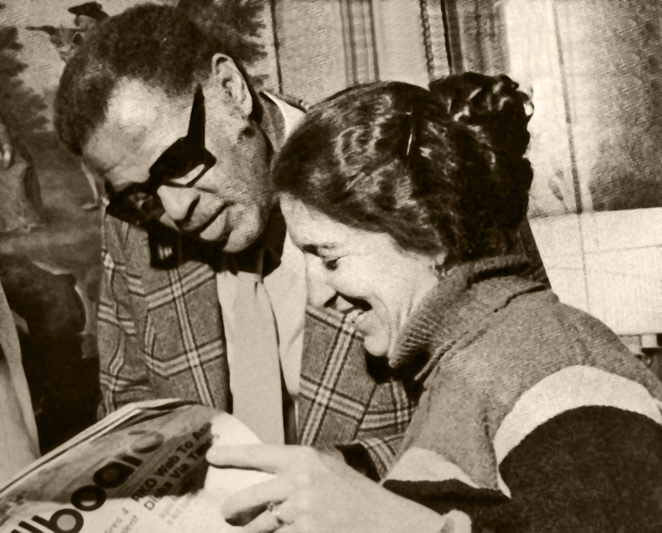
Dexter and Maxine Gordon
The next show will air on Sunday 11/20 at 11:00 PM – Monday at 1:00 AM on WBAI, 99.5 FM in the NYC metro area or streaming online at wbai.org.
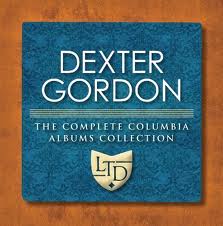
Tune into this program to hear more about this legendary composer, band leader tenor and soprano saxophonist. We’ll talk to Dexter’s wife Maxine Gordon and host a repeat visit from Woody Shaw III. We will also sample the box set Dexter Gordon – The Complete Columbia Albums Collection.
Dexter Keith Gordon was born on February 27, 1923 in Los Angeles, California. His father, Dr. Frank Gordon, was one of the first African American doctors in Los Angeles who arrived in 1918 after graduating from Howard Medical School in Washington, D.C. Dexter’s mother, Gwendolyn Baker, was the daughter of Captain Edward Baker, one of the five African American Medal of Honor recipients in the Spanish-American War.
Dexter began his study of music with the clarinet at age 13, then switched to the alto saxophone at 15, and finally to the tenor saxophone at 17. He studied music with Lloyd Reese and at Jefferson High School with Sam Browne. In his last year of high school, he received a call from alto saxophonist Marshall Royal asking him to join the Lionel Hampton Band. He left Los Angeles with the band, traveling down south and learning to play from fellow band members Illinois Jacquet and Joe Newman. In January 1941, the band played at the Grand Terrace in Chicago for six months and the radio broadcasts made there were Dexter’s first recordings.
It was in 1943, while in New York City with the Hampton band, that Dexter sat in at Minton’s Playhouse with Ben Webster and Lester Young. This was to be one of the most important moments in his long musical career as, as he put it, “people started to take notice.”
In the late 40s, Dexter appeared on the famed 52nd Street in New York City with Charlie Parker, Fats Navarro, Miles Davis, Max Roach, and many of the bebop innovators of the day.
In 1960, Dexter was approached by Alfred Lion to sign with Blue Note Records. For five years, he made one session after another, and they are all considered classics. When asked which of all his recordings was his favorite, Dexter said: “I would have to say it is “Go!” The perfect rhythm section which made is possible for me to play whatever I wanted to play.”
In 1976, Dexter enjoyed a hero’s welcome in the U.S. when he made his return engagement at Storyville in New York City with Woody Shaw, Louis Hayes, Ronnie Mathews, and Stafford James. He subsequently played the Village Vanguard, signed with Columbia Records, and was officially back in town. He organized his first working band during this period with George Cables, Rufus Reid, and Eddie Gladden. He considered this band to be his best band and he toured extensively with them and recorded Live at the Keystone (Mosaic) and Manhattan Symphonie (CBS Sony) with the group.
In 1986, Dexter moved into his new career, acting, in the motion picture Round Midnight, which was directed by Bertrand Tavernier. He was nominated for an Academy Award for Best Leading Actor in 1986 for his portrayal of Dale Turner, a character based on the lives of Lester Young and Bud Powell. The music for the film won an Oscar for musical director, Herbie Hancock. The film included fellow musicians Bobby Hutcherson, Billy Higgins, Cedar Walton, Freddie Hubbard, Tony Williams, Pierre Michelot, John McLaughlin, and Wayne Shorter.
Dexter died on April 25, 1990 in Philadelphia, Pennsylvania.
Hosted by Arts Producer Joyce Jones.
 Suga' in My Bowl