Suga' in My Bowl
Hank Williams
Sunday 12/14/2014 Show: Oliver Lake

Photo: Oliver Lake | John Hurd/Flickr. Creative Commons licensed. Some Rights Reserved by photographer.
The next show will air on Sunday, December 14, 2014 from 11:00 PM – 1:00 AM Monday Eastern Standard Time on WBAI, 99.5 FM in the NYC metro area or streaming online at wbai.org. This broadcast features an interview with poet, painter, performance artist, saxophonist and composer Oliver Lake. Join us as Lake discusses his past work with the Black Artists Group, continuing work with the World Saxophone Quartet, Trio 3, his visual art and poetry and his upcoming performances at the 2015 Winter Jazz Festival. You can hear a short preview below.
Extremely few artists could embrace such a diverse array of musical styles and disciplines. Lake is not only able to thrive in all of these environments, but does so without distorting or diluting his own remarkable artistic identity. Part of this is due to his experience with the Black Artists Group (BAG), the legendary multi-disciplined and innovative St. Louis collective he co-founded with poets Ajule and Malinke, and musicians Julius Hemphill and Floyd La Flore over 35 years ago. But in reality, Oliver’s varied artistic interests go back even further than that.
Born in Marianna, Arkansas in 1942, Lake moved to St. Louis at the age of two. He began drawing at the age of thirteen (and paints daily, using oil, acrylics, wood, canvas, and mixed media), and soon after began playing cymbals and bass drum in various drum and bugle corps. At 17, he began to take a serious interest in jazz. Like many other members of BAG and its Chicago-based sister organization, the Association for the Advancement of Creative Musicians (AACM), Lake moved to New York in the mid-’70s, working the fertile ground of the downtown loft scene and quickly establishing himself as one of its most adventurous and multi-faceted artists.
A co-founder of the internationally acclaimed World Saxophone Quartet with Hemphill, Hamiet Bluiett and David Murray in 1977, Lake continued to work with the WSQ and his own various groups – including the groundbreaking roots/reggae ensemble Jump Up – and collaborating with many notable choreographers, poets and a veritable Who’s Who of the progressive jazz scene of the late 20th century, performing all over the U.S. as well as in Europe, Japan, the Middle East, Africa and Australia.
While he has continued to tour regularly with his own groups, collaborations and guest appearances, Lake recognized the changing trends and new challenges facing creative artists, especially those working in the jazz tradition. Always a strong proponent of artist self-empowerment and independence, in 1988 Lake founded Passin’ Thru, Inc., a 501(c)(3) non-profit, dedicated to fostering, promoting and advancing the knowledge, understanding and appreciation of jazz, new music and other disciplines in relation to music.
Under his artistic direction, Passin’ Thru has commissioned new works, sponsored performances by emerging artists, documented works by prominent artists, and has established on-going educational activities not only in its home base of New Jersey and New York, but also in Florida, Minnesota, Arizona and Pennsylvania, along with occasional activities in other locales all over the U.S. The organization also operates Passin’ Thru Records. In addition to Lake’s albums, ranging from solo to big band, Passin Thru has also issued recordings by the late, legendary multi-reed master Makanda Ken McIntyre, piano great John Hicks, the first recording by Lake’s mentor, St. Louis tenor sax giant Freddie Washington, and renowned trombonist Craig Harris.
Lake currently, performs, composes, and tours with his Organ Quartet, Steel Quartet, Big Band, the WSQ and Trio 3.
Show engineered, produced, hosted, and edited by Joyce Jones. Listen for our On the Bandstand segment with NYC metro area appearances of Suga’ guests at the end of the first hour with Associate Producer Hank Williams.
Web Extras:
Watch Lake perform live in Poland with the World Sax Quartet in 1998.
Watch Lake perform live with Trio 3 at the 2012 Vision Festival in New York.
Watch the closing song from Lake’s live performance with Trio 3 at the <a href="2012 Vision Festival” title=”2012 Vision Fest” target=”_blank”>2012 Vision Festival.
[youtube https://www.youtube.com/watch?v=m5_btir6j6k&feature=youtu.be
Sunday 11/30/2014 Show: Joe Daley, Part 2

Photo: Joe Daley | Giovanni Balossini/Flickr. Creative Commons licensed.
The next show will air on Sunday, November 30, 2014 from 11:00 PM – 1:00 AM Monday Eastern Standard Time on WBAI, 99.5 FM in the NYC metro area or streaming online at wbai.org. This broadcast features the second part of an interview with Low Brass Specialist Joesph (Joe) Daley. Best known for playing the tuba, Daley also plays euphonium and valve trombone; but these days his growing reputation as a visionary composer is bringing him worldwide acclaim. You can hear a short preview below.
Born in New York City’s Harlem, Joe Daley began his musical studies in elementary school and received high honors and recognition throughout his school years (including the renowned High School of Music and Art), and was a member of the most prestigious ensembles in the New York City school system.
A scholarship to the Manhattan School of Music resulted in his Bachelor’s degree in Performance and a Master’s degree in Music Education and led to a career as an educator in the New York and New Jersey school systems from 1976 until his retirement in 2005.
Daley contributed heavily to groups led by other major artists including Sam Rivers, Muhal Richard Abrams, Makanda Ken McIntyre, Taj Mahal, Jason Hwang and Dave Douglas, and was an original member of Howard Johnson’s groundbreaking tuba ensemble, Gravity. He has also been a longtime collaborator with the highly respected composer/ethnomusicologist and master of non-Western instruments, Bill Cole, a relationship that is still intact.
Daley is also currently a member of the highly eclectic ensemble Hazmat Modine, under the direction of musician and visual artist Wade Schuman.
After nearly 40 years of recognition as one of the consummate sidemen on the adventurous music scene – with remarkable artists like Sam Rivers, Carla Bley, Gil Evans, Charlie Haden, Taj Mahal and so many more – Daley stunned musicians and fans alike with his brilliant CD of compositions, The Seven Deadly Sins, released in 2011.
The Seven Heavenly Virtues (CD Baby, 2013) was Daley’s sophomore release.
Daley’s latest release is Portraits: Wind, Thunder and Love (CD Baby, 2014). All Daley’s recordings are available on CD Baby.
This show will go deeper into Daley’s experience teaching and his collaborations with musicians Bill Cole, Charlie Haden, and Sam Rivers. We’ll also discuss his work with the late poet Jayne Cortez (who we profiled in an earlier show) and her backing band The Firespitters and what it was like to work with the play Jelly’s Last Jam. We’ll wrap, appropriately enough, with Daley’s current work with Hazmat Modine.
Show engineered, produced, hosted, and edited by Joyce Jones. Listen for our On the Bandstand segment with NYC metro area appearances of Suga’ guests at the end of the first hour with Associate Producer Hank Williams.
Our first show featuring Joe Daley aired on November 16th.
Web Extras:
Watch the short trailer for Earthtones featuring Daley and music from his The Seven Deadly Sins release.
Sunday 11/16/2014 Show: Joe Daley, Part 1
Photo: Joe Daley | Giovanni Balossini/Flickr. Creative Commons licensed.
The next show will air on Sunday, November 16, 2014 from 11:00 PM – 1:00 AM Monday Eastern Standard Time on WBAI, 99.5 FM in the NYC metro area or streaming online at wbai.org. This broadcast features the first of two parts of an interview with Low Brass Specialist Joesph (Joe) Daley. Best known for playing the tuba, Daley also plays euphonium and valve trombone; but these days his growing reputation as a visionary composer is bringing him worldwide acclaim. You can hear a short preview below.
Born in New York City’s Harlem, Joe Daley began his musical studies in elementary school and received high honors and recognition throughout his school years (including the renowned High School of Music and Art), and was a member of the most prestigious ensembles in the New York City school system.
A scholarship to the Manhattan School of Music resulted in his Bachelor’s degree in Performance and a Master’s degree in Music Education and led to a career as an educator in the New York and New Jersey school systems from 1976 until his retirement in 2005.
Daley contributed heavily to groups led by other major artists including Sam Rivers, Muhal Richard Abrams, Makanda Ken McIntyre, Taj Mahal, Jason Hwang and Dave Douglas, and was an original member of Howard Johnson’s groundbreaking tuba ensemble, Gravity. He has also been a longtime collaborator with the highly respected composer/ethnomusicologist and master of non-Western instruments, Bill Cole, a relationship that is still intact.
Daley is also currently a member of the highly eclectic ensemble Hazmat Modine, under the direction of musician and visual artist Wade Schuman.
After nearly 40 years of recognition as one of the consummate sidemen on the adventurous music scene – with remarkable artists like Sam Rivers, Carla Bley, Gil Evans, Charlie Haden, Taj Mahal and so many more – Daley stunned musicians and fans alike with his brilliant CD of compositions, The Seven Deadly Sins, released in 2011.
The Seven Heavenly Virtues (CD Baby, 2013) was Daley’s sophomore release.
Daley’s latest release is Portraits: Wind, Thunder and Love (CD Baby, 2014). All Daley’s recordings are available on CD Baby.
Show engineered, produced, hosted, and edited by Joyce Jones. Listen for our On the Bandstand segment with NYC metro area appearances of Suga’ guests at the end of the first hour with Associate Producer Hank Williams.
Part 2 of our exploration of Joe Daley’s work will air on the November 30th show.
Web Extras:
Watch the short trailer for Earthtones featuring Daley and music from his The Seven Deadly Sins release.
Sunday 11/2/2014 Show: Revisiting the Black Arts Movement

Photo: Amiri Baraka | Joyce Jones
The next show will air on Sunday, November 2, 2014 from 11:00 PM – 1:00 AM Monday Eastern Standard Time on WBAI, 99.5 FM in the NYC metro area or streaming online at wbai.org. This installment of Suga’ will continue our discussion on the legacy of the Black Arts Movement with Sonia Sanchez and Drs. John Bracey and James Smethurst of the University of Massachusetts Amherst at a release party for their new book on the Black Arts Movement, SOS: Calling All Black People: A Black Arts Movement Reader.
 Sonia Sanchez, whose been previously featured on Suga’ in My Bowl, while best known for her poetry and central role in the Black Arts Movement, is also a playwright, activist, and educator. In her presentation, Sanchez recalls the origin of Baraka’s decision to come to Harlem and help organize Black artists and discusses the beginning of Black Studies programs. She also speaks about the role of the Black artist and what she expects of herself as a poet. Sanchez also talks about her discovery of the Schomburg library and Micheaux’s legendary Harlem bookstore and Malcolm X’s influential role in her political and intellectual development.
 Dr. John Bracey is chair of the W.E.B. DuBois Department of Afro American Studies at UMass Amherst, where he’s taught since 1972. In the 1960s, Bracey was active in the Civil Rights and Black liberation movements in Chicago and has focused on this time period in his research. In his presentation, Bracey discusses Baraka’s contributions to the Black Arts, provides context for the emergence of the movement, and makes connections to current artists in hip hop.
Dr. James Smethurst is Professor of Afro American Studies at UMass Amherst. He is author and editor of several books, including The Black Arts Movement: Literary Nationalism in the 1960s and 1970s and The New Red Negro: The Literary Left and African American Poetry, 1930-1946. He is also working on a history of the Black Arts Movement in the south. Smethurst gives a timeline of the Black Arts Movement and discusses the role of Amiri Baraka in the movement.
SOS—Calling All Black People: A Black Arts Movement Reader brings together a broad range of key writings from the Black Arts Movement of the 1960s and 1970s, among the most significant cultural movements in American history. The aesthetic counterpart of the Black Power Movement, it burst onto the scene in the form of artists’ circles, writers’ workshops, drama groups, dance troupes, new publishing ventures, bookstores, and cultural centers, and had a presence in practically every community and college campus with an appreciable African-American population. Black Arts activists extended the reach even further through magazines such as Ebony and Jet, on television shows such as Soul! and Like It Is, and on radio.
Special thanks to the Center for Black Literature at Medgar Evers College in Brooklyn for permission to record the presentations at their event and to WBAI producer Dred Scott Keyes, who gathered the sound and presented parts of it on his WBAI show Cutting Edge.
Show engineered, produced, hosted, and edited by Joyce Jones. Sound recording and engineering by Dred Scott Keyes. Listen for our On the Bandstand segment with NYC metro area appearances of Suga’ guests at the end of the first hour with Associate Producer Hank Williams.
This show will feature highlights of our premium for the fall fund drive, which is a 2-CD presentation of the book release event at the Center for Black Literature at Medgar Evers College on October 9, 2014. Discussion panelists were co-editors Sonia Sanchez with Drs. John H. Bracey Jr. and James Smethurst. For your generous financial support to WBAI-FM, you will be able to get a copy of this program, the SOS—Calling All Black People reader, or both! You can also support WBAI (and the show) by donating as little as $5 during the fund drive.
Photos: John Bracey via UMass Afro Am | Sonia Sanchez via Wikimedia Commons / Slowking
Web links:
Pledge for the Suga in My Bowl Black Arts Movement 2-CD audio premium
Pledge for the SOS—Calling All Black People reader from the University of Massachusetts Press.
Donate whatever you can to WBAI to support Suga’ in My Bowl
Sunday 10/19/2014 Show: SOS Black Arts book presentation
Photo: Amiri Baraka | Joyce Jones
The next show will air on Sunday, October 19, 2014 from 11:00 PM – 1:00 AM Monday Eastern Standard Time on WBAI, 99.5 FM in the NYC metro area or streaming online at wbai.org. This installment of Suga’ will focus on the legacy of the Black Arts Movement and feature talks by Sonia Sanchez and Drs. John Bracey and James Smethurst of the University of Massachusetts Amherst at a release party for their new book on the Black Arts Movement, SOS: Calling All Black People: A Black Arts Movement Reader. You can hear a short preview below.
Sonia Sanchez, whose been previously featured on Suga’ in My Bowl, while best known for her poetry and central role in the Black Arts Movement, is also a playwright, activist, and educator. In her presentation, Sanchez recalls the origin of Baraka’s decision to come to Harlem and help organize Black artists and discusses the beginning of Black Studies programs. She also speaks about the role of the Black artist and what she expects of herself as a poet. Sanchez also talks about her discovery of the Schomburg library and Micheaux’s legendary Harlem bookstore and Malcolm X’s influential role in her political and intellectual development.
Dr. John Bracey is chair of the W.E.B. DuBois Department of Afro American Studies at UMass Amherst, where he’s taught since 1972. In the 1960s, Bracey was active in the Civil Rights and Black liberation movements in Chicago and has focused on this time period in his research. In his presentation, Bracey discusses Baraka’s contributions to the Black Arts, provides context for the emergence of the movement, and makes connections to current artists in hip hop.
Dr. James Smethurst is Professor of Afro American Studies at UMass Amherst. He is author and editor of several books, including The Black Arts Movement: Literary Nationalism in the 1960s and 1970s and The New Red Negro: The Literary Left and African American Poetry, 1930-1946. He is also working on a history of the Black Arts Movement in the south. Smethurst gives a timeline of the Black Arts Movement and discusses the role of Amiri Baraka in the movement.
SOS—Calling All Black People: A Black Arts Movement Reader brings together a broad range of key writings from the Black Arts Movement of the 1960s and 1970s, among the most significant cultural movements in American history. The aesthetic counterpart of the Black Power Movement, it burst onto the scene in the form of artists’ circles, writers’ workshops, drama groups, dance troupes, new publishing ventures, bookstores, and cultural centers, and had a presence in practically every community and college campus with an appreciable African-American population. Black Arts activists extended the reach even further through magazines such as Ebony and Jet, on television shows such as Soul! and Like It Is, and on radio.
Special thanks to the Center for Black Literature at Medgar Evers College in Brooklyn for permission to record the presentations at their event and to WBAI producer Dred Scott Keyes, who gathered the sound and presented parts of it on his WBAI show Cutting Edge.
Show engineered, produced, hosted, and edited by Joyce Jones. Sound recording and engineering by Dred Scott Keyes. Listen for our On the Bandstand segment with NYC metro area appearances of Suga’ guests at the end of the first hour with Associate Producer Hank Williams.
This show will feature highlights of our premium for the fall fund drive, which is a 2-CD presentation of the book release event at the Center for Black Literature at Medgar Evers College on October 9, 2014. Discussion panelists were co-editors Sonia Sanchez with Drs. John H. Bracey Jr. and James Smethurst. For your generous financial support to WBAI-FM, you will be able to get a copy of this program. You can also support WBAI (and the show) by donating as little as $5 during the fund drive.
Photos: John Bracey via UMass Afro Am | Sonia Sanchez via Wikimedia Commons / Slowking
Sunday 10/5/14 Show: Cal Massey’s legacy with Salim Washington
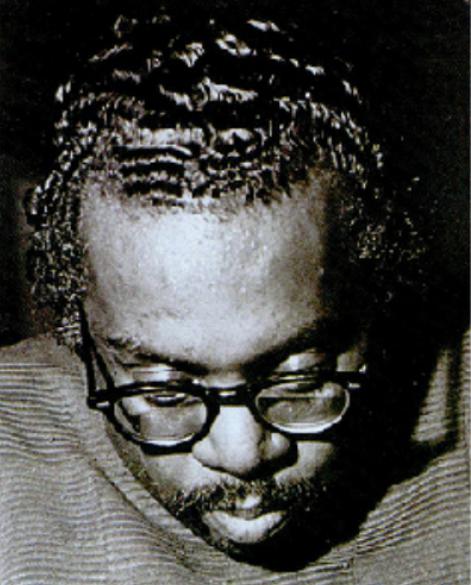
Photo: Cal Massey |
The next show will air on Sunday, October 5, 2014 from 11:00 PM – 1:00 AM Monday Eastern Standard Time on WBAI, 99.5 FM in the NYC metro area or streaming online at wbai.org. This installment of Suga’ will feature a discussion with musician, composer and educator Salim Washington on the work of the legendary trumpeter, composer and arranger Cal Massey. You can hear a short preview below.
Calvin “Cal” Massey (January 11, 1928 – October 25, 1972) is virtually unknown with the exception of both highly knowledgeable “jazz” scholars and a small coterie of illustrious musicians who remain alive and were immensely indebted to Massey’s musical influence and mentorship.
Massey studied trumpet under Freddie Webster, and following this played in the big bands of Jay McShann, Jimmy Heath, and Billie Holiday. In the late 1950s he led an ensemble with Jimmy Garrison, McCoy Tyner, and Tootie Heath; John Coltrane and Donald Byrd occasionally played with them. In the 1950s he gradually receded from active performance and concentrated on composition; his works were recorded by Coltrane, Freddie Hubbard, Jackie McLean, Lee Morgan, Philly Joe Jones, and Archie Shepp. Massey played with Shepp from 1969 until 1972.
The most comprehensive article on Cal Massey was written by the late Fred Ho. Ho is also responsible for the only recording of Massey’s 1970s nine-part “Black Liberation Suite,” which was revisited in 1986 with new arrangements by one of Massey’s close collaborators Romulus Franceschini, Massey also performed in The Romas Orchestra with Franceschini.
Massey’s last composition was Lady Day: A Musical Tragedy. Massey was a father figure and close friend to many of the greatest “jazz” musicians of the post-World War era until his early death in 1972.
 Salim Washington is co-author of Clawing at the Limits of Cool: Miles Davis, John Coltrane, and the Greatest Jazz Collaboration Ever and continues to be a committed teacher, writer, speaker and performer in numerous solo, group and ensemble projects. He is also touring with the Eco-Music Big Band, a jazz ensemble mixing the music of Fred Ho and Cal Massey with political aspects. When he first met Fred Ho at Harvard in 1976, the two instantly became good friends, political comrades and musical collaborators. The two crossed paths again in 2000 when Fred reached out and asked Salim to join his Afro-Asian Music Ensemble. The pair would go on working together, playing and giving lectures as a scientific duo in numerous events. In 2012, they started the Scientific Soul Sessions, a collective for revolutionaries to build a soulful and scientific community. The Eco-Music Big Band is one of the many progenies from this effort of using art to inform politics and vice versa.
Show engineered, produced, hosted, and edited by Joyce Jones. Listen for our On the Bandstand segment with NYC metro area appearances of Suga’ guests at the end of the first hour with Associate Producer Hank Williams.
Web Extras:
Read Brooklyn College Professor Jeff Taylor‘s article “Brooklyn Rediscovers Cal Massey” in the spring 2010 American Music Review for more background on Cal Massey: PDF
Watch the late Fred Ho conduct a 2012 live performance of Massey’s “The Black Liberation Suite, Part One” at Harlem’s Red Rooster club with show guest Salim Washington on saxophone.
Watch
Sunday 9/21/14 Show: Joe Sample Memorial

Photo: Joe Sample | Flickr user Tom.Beetz via Wikicommons
The next show will air on Sunday, September 21, 2014 from 11:00 PM – 1:00 AM Monday Eastern Standard Time on WBAI, 99.5 FM in the NYC metro area or streaming online at wbai.org. This installment of “Suga’ In My Bowl” will feature a rebroadcast of a 2013 show with pianist Joe Sample, known to many from his work with The Jazz Crusaders (later The Crusaders), who died on September 12, 2014. You can hear a short preview below.
One of the many jazzmen who started out playing hard bop but went electric during the fusion era, Joe Sample was, in the late ’50s, a founding member of the Jazz Crusaders along with trombonist Wayne Henderson, tenor saxman Wilton Felder, and drummer Stix Hooper. The Crusaders’ debt to Art Blakey’s Jazz Messengers wasn’t hard to miss — except that the L.A.-based unit had no trumpeter, and became known for its unique tenor/trombone front line. Sample, a hard-swinging player who could handle chordal and modal/scalar improvisation equally well, stuck to the acoustic piano during The Crusaders’ early years — but would place greater emphasis on electric keyboards when the band turned to jazz-funk in the early ’70s and dropped “Jazz” from its name. Though he’d recorded as a trio pianist on 1969’s Fancy Dance, 1978’s Rainbow Seeker was often described as his first album as a leader. In contrast to the gritty music The Crusaders became known for, Sample’s own albums on MCA and, later, Warner Bros. and PRA have generally favored a very lyrical and introspective jazz-pop approach.
Unsurprisingly, there are several Sample obituaries. For starters, we recommend the ones by Peter Keepnews in the New York Times, Steve Chawkins in the Los Angeles Times (who notes The Crusaders’ and Sample’s appeal with the activist community), and Andrew Dansby in The Houston Chronicle (who notes his return to Creole music at the end of his life).
Show engineered, produced, hosted, and edited by Joyce Jones. Listen for our On the Bandstand segment with NYC metro area appearances of Suga’ guests at the end of the first hour with Associate Producer Hank Williams.
Web Extras:
Watch Sample and Randy Crawford perform their classic “Street Life” live in Japan in 2008.
Watch Sample perform “Chain Reaction” live with the Crusaders in Germany, 1987.
Sunday 9/14/14 Show: Steven Kroon

Photo: David France | stevekroon.com
The next show will air on Sunday, September 14, 2014 from 11:00 PM – 1:00 AM Monday Eastern Standard Time on WBAI, 99.5 FM in the NYC metro area or streaming online at wbai.org. This installment of the program will feature an interview with percussionist Steven Kroon. You can hear a short preview of the show below.
Steven Kroon was born in Spanish Harlem to parents who had moved to New York City from their native Puerto Rico. His surname comes from his grandfather, who immigrated to La Isla Encantada from the Dutch-speaking Caribbean island of Curaçao. At the age of nine, the family moved to Queens, where the youngster’s interest in music was further sparked by the presence of many noted jazz and R&B musicians. “In my neighborhood,” he recalls, “I had Eddie “Lockjaw” Davis as a neighbor, and Lester Young was four blocks away. James Brown also lived in the area. But I came with all of my Latin roots, thanks to my father. I was fortunate in being able to hear the whole spectrum of music.” He studied Afro – Cuban percussion with Tommy López, Sr. and later Brazilian rhythms with Dom Um Romão. With such a wealth of knowledge under his belt, it’s not surprising that Kroon quickly became a first – call percussionist for recording sessions that required a wide range of talents. Over the years, such diverse artists as Diana Krall, Aretha Franklin, Roberta Flack, The Temptations, Bill Cosby, Kenny G, Ron Carter, Spyro Gyra, Bette Midler, Gary Bartz and Paul Butterfield have tapped Kroon’s seemingly endless array of skills for their projects.
His two decade-long professional association with R&B crooner Luther Vandross underscores Kroon’s reputation as one of the world’s most versatile and respected percussionists. “My time with Luther was great,” Kroon says today, “but when it came time to do my own thing, I was always knew that it was going to be Latin jazz, because that’s where my heart is.”
Kroon’s 2008 El Mas Alla release, his third solo effort, reflected Latin Jazz’s roots in the type of accessible music that attracted diverse audiences and fans. Kroon approaches the style reverently with an emphasis on finesse. “[W]hen you make an album,” Kroon says, “you need to remember everyone –all kinds of listeners and dancers. If you are having people over for a barbeque, for instance, you should be able to put it on and leave it on. It fits what’s going on.”
Kroon’s latest release is the self-produced and released On the #1, which continues his exploration of Latin Jazz. All About Jazz reviewer Edward Blanco writes that it “features a sweet blend of flute and vibes accents accompanied well by vibrant piano and saxophone voices—all delivered by an A-list cast of players” in his favorable assessment of the CD.
Join us as Kroon discusses his musical influences, his approach to Latin jazz, the Latin music scene, and much more in this wide-ranging interview with — of course — lots of great music.
Show engineered and edited by Joyce Jones. Produced and hosted by Joyce Jones and Hank Williams. Listen for our On the Bandstand segment with NYC metro area appearances of Suga’ guests at the end of the first hour with Associate Producer Hank Williams.
Web Extras:
Watch Steven Kroon’s sextet perform live at the Central Brooklyn Jazz Consortium‘s festival.
Watch Kroon’s sextet perform live at the Abyssinian Baptist Church’s Jazz Vespers.
Sunday 9/7/14 Show: Abiodun Oyewole
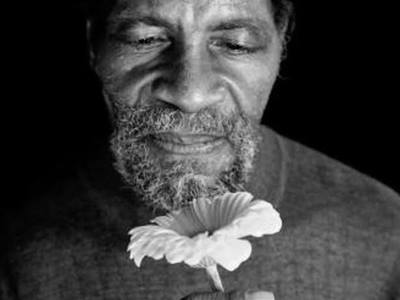
The next show will air on Sunday, September 7, 2014 from 11:00 PM – 1:00 AM Monday Eastern Standard Time on WBAI, 99.5 FM in the NYC metro area or streaming online at wbai.org. This installment of the program will feature an interview with poet and vocalist Abiodun Oyewole. You can hear a short preview of the show below.
Abiodun Oyewole grew up Charles Davis in Queens, NY. Listening to his parents’ jazz and gospel records and studying Langston Hughes and other great poets in school helped nurture Oyewole’s love of poetry. His mother taught him to “throw [his] voice” by making him recite the Lord’s Prayer in their basement so that she could hear him in the kitchen.
When he was 15, Charles Davis and a friend went into a Yoruban Temple in Harlem out of curiosity. The Yoruba priest there performed a ceremony with Davis and gave him the name Abiodun Oyewole. He began reading about the Yoruba gods and the significance of one’s ancestors, and felt a deep spiritual connection to the religion: “I could say a prayer to my ancestors every morning so they could help me through my life. [That] made all the sense in the world to me.”
The Last Poets were born on May 19, 1968, when David Nelson, Gylan Kain, and Abiodun Oyewole read poetry at a memorial for Malcolm X. Their goal was to be a poetic voice for Malcolm’s call for self-determination and black nationalism. Like many black activists of the time, they were tired of Martin Luther King’s integrationist agenda. They were much more influenced by the politics of radical members of the SNCC (Student Non-Violent Coordinating Committee), the SDS (Students for a Democratic Society), and the Black Panthers.
Their style of poetry reflected the radicalism of the day: “…with the Poets, we were angry and we had something to say. We addressed the language. We just put it right in front of your face.” But Yoruba also had a profound influence on Oyewole’s poetry: “It’s given me a foundation to elevate my way of thinking and to connect me with the Motherland, as well as to create images that are wholesome and holistic, as opposed to having to repeat the Tarzan madness that has been given to us.”
The Last Poets went through many incarnations as members came and left – including Oyewole, who served four years in a North Carolina prison for robbery. They released several albums and wrote the classic poems “Niggers are Scared of Revolution,” “This is Madness,” and “When the Revolution Comes.” They are widely acknowledged as being the fathers of the hip-hop movement.
The original 1970 album, titled simply The Last Poets and released on Douglas Records, remains a landmark of Black Arts Movement spoken word.
The Last Poets, consisting of original member Abiodun Oyewole and Umar Bin Hassan with Don Babatunde Eaton on percussion, are now enjoying a resurgence of popularity.
Oyewole’s latest projects are a book of his collected work, Branches of the Tree of Life, published by 2Leaf Press, and a CD of new poetry, titled #Gratitude, which is schduled for release in fall 2014 and has a Kickstarter campaign to provide the necessary funding for independent production and distribution and an affiliated documentary film.
Show engineered and edited by Joyce Jones. Produced and hosted by Joyce Jones and Hank Williams. Listen for our On the Bandstand segment with NYC metro area appearances of Suga’ guests at the end of the first hour with Associate Producer Hank Williams.
Program note: Last call for Suga in My Bowl’s premium of Howard University professor Dr. Greg Kimathi Carr‘s fantastic biography of the legendary Pan African scholar Dr. John Henrik Clarke that we previewed last month on the show. You can support WBAI (and our show) by pledging for a copy of the Dr. Clarke special on CD or donating as little as $5 at WBAI’s secure online donation site.
Web Extras:
Listen to one track from Oyewole’s forthcoming #Gratitude release.
Watch a short preview of Oyewole’s forthcoming 2Leaf Press book Branches of the Tree of Life, filmed and produced by Vagabond Beaumont.
Watch the Kickstarter video for Oyewole’s #Gratitude release.
Sunday 8/24/14 Show: Larry Ridley

The next show will air on Sunday, August 24, 2014 from 11:00 PM – 1:00 AM Monday Eastern Standard Time on WBAI, 99.5 FM in the NYC metro area or streaming online at wbai.org. This installment of the program will feature an interview with bassist and educator Dr. Larry Ridley. You can hear a short preview of the show below.
Dr. Larry Ridley was born and reared in Indianapolis, IN. He began performing professionally while still in high school in the 1950s. He studied at the Indiana University School of Music and later at the Lenox School of Jazz. Dr. Ridley has been involved in jazz education, heading the jazz program at Rutgers University.
Dr. David Baker, another Indianapolis native and notable jazz musician, was one of his prime mentors. Dr. Ridley was bassist for David Baker’s Big band during his studies at Indiana University.
Dr. Ridley served as chairman of the Jazz Panel of the National Endowment for the Arts (NEA) and was the organization’s National Coordinator of the “Jazz Artists in Schools” Program for five years (1978–1982). Dr. Ridley is a recipient of the MidAtlantic Arts Foundation’s “Living Legacy Jazz Award”, a 1998 inductee to the International Association for Jazz Education Hall of Fame (IAJE), an inductee of the Downbeat Magazine Jazz Education Hall of Fame, a recipient of the Benny Golson Jazz Award from Howard University, and was honored by a Juneteenth 2006 Proclamation Award from the New York City Council. Dr. Ridley is currently the Executive Director of the African American Jazz Caucus, Inc., an affiliate of IAJE. He was also the IAJE Northeast Regional Coordinator. He continues to actively teach as Professor of Jazz Bass at the Manhattan School of Music. Dr. Ridley served as Jazz Artist in Residence at the Harlem based New York Public Library/Schomburg Center for Research in Black Culture. He established an annual series there dedicated to presenting the compositions of jazz masters that are performed by Dr. Ridley and his Jazz Legacy Ensemble.
Show engineered, produced, hosted, and edited by Joyce Jones. Listen for our On the Bandstand segment with NYC metro area appearances of Suga’ guests at the end of the first hour with Associate Producer Hank Williams.
Program note: It’s not too late to grab a copy of Suga in My Bowl’s premium of Howard University professor Dr. Greg Kimathi Carr‘s fantastic biography of the legendary Pan African scholar Dr. John Henrik Clarke that we previewed 2 weeks ago on the show. You can support WBAI (and our show) by pledging for a copy of the Dr. Clarke special on CD or donating as little as $5 at WBAI’s secure online donation site.
Web Extras:
Watch Dr. Ridley talk about the system of jazz apprenticeship and what learned from Horace Silver in this short interview.
Watch Dr. Ridley and the Jazz Legacy Ebsemble in this 2011 live performance at the Schomburg Center.
 Suga' in My Bowl