Suga' in My Bowl
Hank Williams
Sunday 11/18 show: Pharoah Sanders
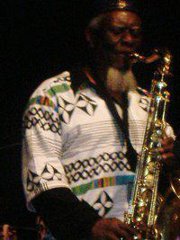 The next show will air on Sunday November 18, 2012 from 11:00pm – 1:00am Monday on WBAI, 99.5 FM in the NYC metro area or streaming online at wbai.org.
On Sunday, November 18, “Suga’ In My Bowl” will celebrate Jazz legend Pharoah Sanders’ run at Birdland this week by offering the program that originally aired on April 20, 2010. Join Joyce Jones and Hank Williams as they spend time with this marvel in the music.
Pharoah Sanders possesses one of the most distinctive tenor saxophone sounds in jazz. Harmonically rich and heavy with overtones, Sanders’ sound can be as raw and abrasive as it is possible for a saxophonist to produce. Yet, Sanders is highly regarded to the point of reverence by a great many jazz fans. Although he made his name with expressionistic, nearly anarchic free jazz in John Coltrane’s late ensembles of the mid-’60s, Sanders’ later music is guided by more graceful concerns.
The hallmarks of Sanders’ playing at that time were naked aggression and unrestrained passion. In the years after Coltrane’s death, however, Sanders explored other, somewhat gentler and perhaps more cerebral avenues — without, it should be added, sacrificing any of the intensity that defined his work as an apprentice to Coltrane.
Pharoah Sanders (his given name, Ferrell Sanders) was born into a musical family. Sanders’ first instrument was the clarinet, but he switched to tenor sax as a high school student, under the influence of his band director, Jimmy Cannon. Cannon also exposed Sanders to jazz for the first time. Sanders’ early favorites included Harold Land, James Moody, Sonny Rollins, Charlie Parker, and John Coltrane. As a teenager, he played blues gigs for ten and 15 dollars a night around Little Rock, backing such blues greats as Bobby “Blue” Bland and Junior Parker. After high school, Sanders moved to Oakland, CA, where he lived with relatives. He attended Oakland Junior College, studying art and music. Known in the San Francisco Bay Area as “Little Rock,” Sanders soon began playing bebop, rhythm & blues, and free jazz with many of the region’s finest musicians, including fellow saxophonists Dewey Redman and Sonny Simmons, as well as pianist Ed Kelly and drummer Smiley Winters. In 1961, Sanders moved to New York, where he struggled. Unable to make a living with his music, Sanders took to pawning his horn, working non-musical jobs, and sometimes sleeping on the subway. During this period he played with a number of free jazz luminaries, including Sun Ra, Don Cherry, and Billy Higgins. Sanders formed his first group in 1963, with pianist John Hicks (with whom he would continue to play off-and-on into the ’90s), bassist Wilbur Ware, and drummer Higgins. The group played an engagement at New York’s Village Gate. A member of the audience was John Coltrane, who apparently liked what he heard. In late 1964, Coltrane asked Sanders to sit in with his band. By the next year, Sanders was playing regularly with the Coltrane group, although he was never made an official member of the band. Coltrane’s ensembles with Sanders were some of the most controversial in the history of jazz. Their music, as represented by the group’s recordings — Om, Live at the Village Vanguard Again, and Live in Seattle among them — represents a near total desertion of traditional jazz concepts, like swing and functional harmony, in favor of a teeming, irregularly structured, organic mixture of sound for sound’s sake. Strength was a necessity in that band, and as Coltrane realized, Sanders had it in abundance.
Sanders made his first record as a leader in 1964 for the ESP label. After John Coltrane’s death in 1967, Sanders worked briefly with his widow, Alice Coltrane. From the late ’60s, he worked primarily as a leader of his own ensembles. From 1966-1971, Sanders released several albums on Impulse, including Tauhid (1966), Karma (1969), Black Unity (1971), and Thembi (1971). In the mid-’70s, Sanders recorded his most commercial effort, Love Will Find a Way (Arista, 1977); it turned out to be a brief detour. From the late ’70s until 1987, he recorded for the small independent label Theresa. From 1987, Sanders recorded for the Evidence and Timeless labels. The former bought Theresa records in 1991 and subsequently re-released Sanders’ output for that company. In 1995, Sanders made his first major-label album in many years, Message From Home (produced by Bill Laswell for Verve). The two followed that one up in 1999 with Save Our Children. In 2000, Sanders released Spirits — a multi-ethnic live suite with Hamid Drake and Adam Rudolph. In the decades after his first recordings with Coltrane, Sanders developed into a more well-rounded artist, capable of playing convincingly in a variety of contexts, from free to mainstream. Some of his best work is his most accessible. As a mature artist, Sanders discovered a hard-edged lyricism that has served him well.
Bio from Chris Kelsey, All Music Guide.
Show hosted and produced by Joyce Jones and Hank Williams. Engineered by Joyce Jones.
Sunday 11/4 show: Pianist Onaje Allen Gumbs
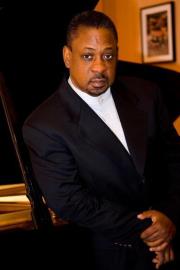 The next show will air on Sunday November 4, 2012 from 11:00pm – 1:00am Monday on WBAI, 99.5 FM in the NYC metro area or streaming online at wbai.org. WBAI’s stream may not be available due to to damage suffered in Hurricane Sandy. Because the station is operating from a remote location, the show may not start exactly at 11, so please be patient if you’re listening live. We’ve decided to make it available on our archives page at the normal air time to make it as available as possible.
During this post-Hurricane Sandy installment, we will feature pianist/keyboardist/producer/arranger/songwriter Onaje Allan Gumbs (pronounced Oh-Nah-Jay), who is one of the music industry’s most respected and talented music collaborators. Gumbs has worked almost three decades with top talent in the musical fields of jazz, R&B/soul, and pop to hone his considerable skills. A partial list includes Woody Shaw, Nat Adderly, Norman Connors, Angela Bofill, Jean Carn, Cassandra Wilson, Marlena Shaw, Sadao Watanabe, Phyllis Hyman (“The Answer Is You” from his 1979 Somewhere in My Lifetime album), Stanley Jordan, Denise Williams, Vanessa Rubin, Jeffrey Osborne, Eddie Murphy, Rebbie Jackson, and Gerald Albright (Live at Birdland West).
In 1974, Gumbs enjoyed one of the highlights of his arranging career when he created a special arrangement of “Stella By Starlight” for the New York Jazz Repertory Company as a part of a concert honoring Miles Davis at Carnegie Hall. That same year, Gumbs performed on (former Suga’ guest) Woody Shaw’s “Moon Moontrane”. Later, he joined forces with trumpeter Nat Adderley and his quintet, contributing to the group’s recordings on the Atlantic and Steeplechase record labels. Steeplechase’s Nils Winter was impressed by Gumbs’ solo improvisations on several of Adderley’s performances and approached the young pianist that same year to record a solo piano album, Onaje. In 1985, Gumbs further heightened his visibility by contributing his arrangement of “Lady in My Life” to guitarist Stanley Jordan’s enormously successful album Magic Touch. The record held the number one spot on Billboard‘s jazz charts for 37 weeks. The pianist recorded two albums for MCA: That Special Part of Me and 1991’s Dare to Dream.
Gumbs received an NAACP Image Award in 2006 in the Outstanding Jazz category for his independent project Remember Their Innocence.
Jazz Improv Magazine selected his Sack Full of Dreams album featuring singer, actor, producer, and director Obba Babatunde as one of the best jazz recordings of 2007.
Hosted, engineered, and produced by Arts Producer Joyce Jones
Next show: Sunday 10/7 Afro Caribbean and Blues Journeys
The next show will air on Sunday 10/7/2012 from 11:00pm – Monday at 1:00am on WBAI, 99.5 FM in the NYC metro area or streaming online at wbai.org.
This installment of the program will feature encore presentations of two very special audio documentaries chronicling the development of African disapora music. “The Journey: From Africa to the New World Through Cuba, Puerto Rico, The Dominican Republic, Haiti and Beyond” is presented by drummer, percussionist, composer, arranger, multicultural warrior educator Bobby Sanabria. “The Blues Journey,” is courtesy of Dr. Guthrie Ramsey, Professor of Music History at the University of Pennsylvania.
Sanabria’s “The Journey” takes listeners on a musical and historical trip that brilliantly and plainly explains how African musical elements and cultural forms spread across the globe to shape music and culture in the Americas. Countless musical examples make this a deeply engaging and lively presentation. Listen to a short preview of his presentation:
In “the Blues Journey”, Dr. Ramsey lays out his theory of the American music form known as The Blues and expands it beyond the standard 12-bar blues understanding to show how it seeps into several musical forms and areas of cultural expression. Listen to a short preview of his presentation:
Join us as we help continue the important work of WBAI during the Fall Membership Drive. “The Journey” was one of the year’s most popular fund drive programs and got such positive feedback that we followed it up with “The Blues Journey”. You can help keep the station (and us) on the air by pledging for either “The Journey” with Bobby Sanabria, “The Blues Journey” with Dr. Guthrie Ramsey (or both!) on CDs as a thank you gift. Or simply make a donation to the station. Whatever you decide, be sure to tune in for some great music and information.
Hosted, produced, and engineered by Joyce Jones.
Next Show: Sunday 9/14 Miles Davis and Gil Evans “Still Ahead”
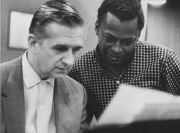 The next show will air on Sunday September 14, 2012 from 11:00pm – 1:00am Monday on WBAI, 99.5 FM in the NYC metro area or streaming online at wbai.org. During this installment, we will feature “Miles Davis and Gil Evans: Still Ahead,” a New Jersey Performing Arts Center (NJPAC) event that is part of what will become an annual “James Moody Democracy of Jazz Festival.” Our guests will be bassist (and former Suga’ guest) Christian McBride, trumpter Terence Blanchard, conductor Vince Mendoza, and NJPAC President and CEO John Schreiber. You can hear a short preview below:
“Miles Davis and Gil Evans: Still Ahead” is an all-star recreation of the landmark original Gil Evans arrangements of the classic Miles Davis recordings of “Porgy and Bess,” “Sketches of Spain,” and Miles Ahead.” This concert will feature a unique cast of jazz greats, including Terence Blanchard, Christian McBride, drummer Peter Erskine, tuba master (and former Suga’ guest) Howard Johnson (who performed live with both Davis and Evans), trumpeter Sean Jones, drummer Jimmy Cobb (who played on the original recording of Porgy and Bess), and a jazz orchestra under the direction of Vince Mendoza.
The James Moody Democracy of Jazz Festival is a weeklong celebration of jazz and the legacy of Newark’s own music master, James Moody from October 15-21, 2012.
Hosted, produced, and engineered by Arts Producer Joyce Jones
Next Show: Sunday 9/2 on Horace Tapscott/ Art and Black Los Angeles 1960-80
The next show will air on Sunday September 2, 2012 from 11:00pm – 1:00am Monday on WBAI, 99.5 FM in the NYC metro area or streaming online at wbai.org and feature exclusive interviews with author Steven Isoardi, author/ Professor/ curator Kellie Jones, and Multi-instrumentalist Sabir Mateen talking about the work of Horace Tapscott and Black art in Los Angeles. You can hear a short promo below:
 During this installment, we will feature “Now Dig This! Art and Black Los Angeles, 1960-1980” with the curator of the exhibit Dr. Kellie Jones, Associate Professor of Art History at Columbia University. We will also speak to Steven Isoardi, author of “The Dark Tree: Jazz and the Community Arts in Los Angeles” and multi-instrumentalist Sabir Mateen about pianist, composer and cultural activist Horace Tapscott.
Now Dig This! Art and Black Los Angeles 1960–1980 chronicles the vital legacy of the African American arts community in Los Angeles, examining a pioneering group of Black artists whose work and connections with other artists of varied ethnic backgrounds helped shape the creative output of Southern California. The exhibition presents approximately 140 works by thirty-two artists active during this historical period, exploring the rising strength of the Black community in Los Angeles as well as the increasing political, social, and economic power of African Americans across the nation.
On October 21, 2012, the exhibit will be on display at MoMA PS 1 in Long Island City through March 11, 2013.
Horace Elva Tapscott (b. Houston, 6 April 1934; d. Los Angeles, 27 Feb 1999) began piano studies at the age of six with his mother, the pianist Mary Lou Malone, and took up trombone two years later. His family moved to Los Angeles in 1943 and he studied trombone in school, playing with Frank Morgan in a high-school band; other young associates from this period included Don Cherry and Billy Higgins. Tapscott worked with Gerald Wilson’s orchestra before graduating from Jefferson High School in 1952. After studying briefly at Los Angeles City College he enlisted in the air force, and served in a band in Wyoming (1953-7). He then returned to Los Angeles and worked with various local bands before touring as a trombonist with Lionel Hampton (1959 to early 1961), for whom he also wrote a number of arrangements and at times sat in on piano. By the early 1960s he was playing piano exclusively, in part because of persistent dental problems resulting from an automobile accident during his high-school years.
By the end of 1961 Tapscott had formed the Pan Afrikan Peoples Arkestra, which at various times included Arthur Blythe, Stanley Crouch, Azar Lawrence, Marcus McLaurine, Roberto Miranda, the brothers Butch and Wilber Morris, David Murray, the saxophonist Michael Session, Sonship Theus, and Jimmy Woods. The purpose of the Arkestra was to preserve, develop, and perform African-American music within the community. Its rapid growth and branching off into related social and artistic activities led to the formation in 1963 of a larger organization, the Underground Musicians Association (UGMA), of which the Pan Afrikan Peoples Arkestra was a component. By the late 1960s the organization’s continued evolution led to broader community involvement, symbolized by a change of name to the Union of God’s Musicians and Artists Ascension (UGMAA). Although activities had tapered off by the mid-1980s, both the Arkestra and UGMAA continued to play a role in their community in the 1990s.
Horace Tapscott’s archives are now housed in University of California, Los Angeles (UCLA) Music Library.
Produced, hosted, and engineered by Arts Producer Joyce Jones
Art images courtesy of the Hammer Museum in Los Angeles, CA.
Web Extras
See more details on the documentary film about Black Los Angeles at the site of Leimert Park: The Story of a Village in South Central LA
Watch a short video preview of the “Now Dig This” show from its previous run at LA’s Hammer Museum. It shows some of the art.
See a few more photos discussed in this week’s Suga’ in My Bowl show:
Next show: Sunday 8/12 with tubist Howard Johnson
The next show will air on Sunday August 8, 2012 from 11:00pm – 1:00am Monday on WBAI, 99.5 FM in the NYC metro area or streaming online at wbai.org and feature an exclusive interview recorded live at the WBAI studio with tubist, multi-instrumentalist, arranger and composer Howard Johnson. You can hear a 30-second preview below:
 One of the top tuba soloists since the early ’60s, Howard Johnson is a very versatile player who not only plays tuba and baritone but other reeds and trumpet. He moved to New York in 1963, where he worked with Charles Mingus (1964-1966), Hank Crawford, and Archie Shepp. In 1966, he started a 20-year off-and-on association with Gil Evans. Johnson’s four-tuba group Substructure performed with Taj Mahal, and, in the late ’70s, he formed a different tuba band called Gravity that, in 1996, finally had the opportunity to record (plus play at the Monterey Jazz Festival). Howard Johnson’s résumé is extensive and includes recording stints with Crawford (1983-1984), Jack DeJohnette’s Special Edition, Jimmy Heath, John Lennon, Bob Moses, and George Gruntz’s Concert Jazz Band. He performed with The Band during the 1970s, appearing on both “Rock of Ages” and “The Last Waltz,” and his association with Levon Helm extended into the 2000s, during which period he often toured alongside the drummer.
Produced, hosted, and engineered by Joyce Jones.
Watch a video of Johnson performing with Gravity …
Next show: Sunday 7/22 “The Blues Journey” with Guthrie Ramsey
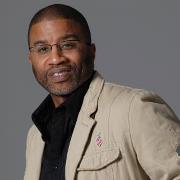 The next show will air on Sunday 7/22/2012 from 11:00pm – Monday at 1:00am on WBAI, 99.5 FM in the NYC metro area or streaming online at wbai.org.
This installment will offer “The Blues Journey,” which is a WBAI Summer FUN Drive special, presented by Dr. Guthrie Ramsey, Professor of Music History at the University of Pennsylvania. Dr. Ramsey will lay out his theory of this completely American music form known as The Blues. This theory is different from the standard 12-bar blues understanding. Listen to a 40-second preview:
Dr. Ramsey specializes in African-American and American music, jazz, cultural studies, popular music, film studies, and historiography. He lectures internationally on these topics. Ramsey is the author of Race Music: Black Cultures from Bebop to Hip-Hop ( University of California Press, 2003), which was named outstanding book of the year by IASPM (International Association for the Study of Popular Music). His current project, In Walked Bud: Earl “Bud ” Powell and the Modern Jazz Challenge, is a study of jazz pianist Bud Powell and is forthcoming from the University of California Press. He has also begun a new book on singer/songwriter Curtis Mayfield. Ramsey was a Thurgood Marshall Dissertation Fellow at Dartmouth College in 1993, a DuBois Institute Fellow at Harvard University in 1996, and taught at Tufts University from 1994-1998. In 2001 he received the Irving Lowens Award for best article from the Society for American Music for “Who Hears Here? Black Music, Critical Bias, and the Musicological Skintrade.” He has published in Black Music Research Journal, The Musical Quarterly, Journal of Popular Music Studies, The Black Scholar, Callaloo, American Music, American Quarterly, Journal of the American Musicological Society, The New York Times and The Village Voice. His band Dr. Guy’s MusiQologY has performed for audiences in South America, New York, Australia, the University of Pennsylvania, the Kimmel Center, and in Philadelphia venues such as Zanzibar Blue and Gloria’s Seafood House. Ramsey composes and arranges all of MusiQologY’s music, which moves beyond the traditional Jazz idiom, experimenting with R&B, Latin, Hip Hop fusions. The band’s first CD, “Y the Q?” The band’s most recent release is “The Colored Waiting Room.”
If you enjoy the show, we ask you to make a pledge to WBAI to help keep it (and us) on the air. You can opt to get a copy of the show on CD as a thank you gift. Sound good? See the details at WBAI’s pledge site.
Next show: Sunday 7/8 with Christian McBride on Jazz Fusion
The next show will air on Sunday June 8, 2012 from 11:00pm – 1:00am Monday on WBAI, 99.5 FM in the NYC metro area or streaming online at wbai.org and feature a return visit from previous Suga’ guest Christian McBride. You can hear a 30-second preview below:
In this installment, we’ll have a discussion about the music that is called “Jazz Fusion” with bassist, composer and Grammy winner Christian McBride, who recently won a Grammy for one of his latest two recordings, “The Good Feeling.”
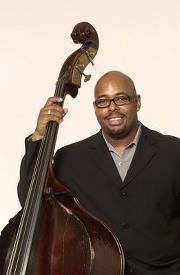 Beginning in 1989, this Philadelphia-born bassist moved to New York City to further his classical studies at the Juilliard School, only to be snatched up by alto saxophonist, Bobby Watson. Since then, McBride’s list of accomplishments have been nothing short of staggering. As a sideman in the jazz world alone, he’s worked with the best of the very best – Freddie Hubbard, Sonny Rollins, J.J. Johnson, Ray Brown, Milt Jackson, McCoy Tyner, Roy Haynes, Chick Corea, Herbie Hancock and Pat Metheny. In the R&B world, he’s not only played with, but also arranged for Isaac Hayes, Chaka Khan, Natalie Cole, Lalah Hathaway, and the one and only Godfather of Soul himself, James Brown. In the pop/rock world, he’s extensively collaborated with Sting, Carly Simon, Don Henley, and Bruce Hornsby. In the hip-hop/neo-soul world, he’s collaborated with the Roots, D’Angelo, and Queen Latifah. In many other specialty projects, he’s worked closely with opera legend Kathleen Battle, bass virtuoso Edgar Meyer, the Shanghai Quartet and the Sonus Quartet.
Away from the bass, Christian has become quite an astute and respected spokesperson for the music. In 1997, he spoke on former President Bill Clinton’s town hall meeting “Racism in the Performing Arts”. In 2000, he was named Artistic Director of the Jazz Aspen Snowmass Summer Sessions. In 2005, he was officially named the co-director of the National Jazz Museum in Harlem. Also in 2005, he was named the second Creative Chair for Jazz of the Los Angeles Philharmonic Association.
Hosted by Arts Producer Joyce Jones
Next show: Sunday, 6/17 with James Mtume on Miles Davis’s electric period
 This installment will feature composer, producer and former percussionist with Miles Davis during his “electric period” James Mtume from 1971 to 1975. It will air on Sunday June 17, 2012 at 11:00pm – Monday at 1:00am on WBAI, 99.5 FM in the NYC metro area or streaming online at wbai.org. You can hear a 30-second promo below:
James Mtume was raised in a musical family where his father and uncles formed a band “The Heath Brothers”. Already in the sixties, James Mtume studied percussion and soon after this, he also acquired guitar playing skills. It didn’t take long before he played together with artists like Herbie Hancock, Joe Henderson, Freddie Hubbard and eventually became the percussionist for Miles Davis. In the Miles Davis band, Reggie Lucas played guitar, and it was with Reggie Lucas that James Mtume started a song writing partnership that became the R&B group Mtume.
Mtume recorded as a bandleader for Strata-East before turning to funk in the late ’70s. Mtume’s band included the sassy, sultry vocalist Tawatha Agee, keyboardist Phil Fields, and bassist Ray Johnson. Mtume, the band, had a number one R&B hit with “Juicy Fruit” for Epic Records in 1983 and a number 2 R&B single in 1984 with “You, Me and He”. Mtume recorded for Epic until the late ’80s. Their final Top Ten hit was “Breathless” in 1986. Mtume produced and/or wrote for such artists as Stephanie Mills, Roberta Flack/Donny Hathaway, Phyllis Hyman, Gary Bartz, Sadane, Lou Rawls, Rena Scott, Eddie Henderson in the late ’70s, Levert, Tyrone Brunson, Roy Ayers, Henderson and Tease. Roots and Influences: Miles Davis and Pharoah Sanders. Mtume’s hits for Robert Flack and Donny Hathaway include “The Closer I Get To You” and “Back Together Again”, both platinum sellers and widely viewed “classic songs” in the business.
Hosted by Joyce Jones.
Web extra: Watch this discussion between jazz critic Stanley Crouch and James Mtume on the music of Miles Davis’s electric period. If you have an older computer or slower internet connection, changing the video quality to a lower setting will give you smoother play with fewer interruptions. Youtube explains how to do that here.
Part 1: 14 minutes, 40 seconds
Part 2: 14 minutes, 9 seconds
Next Show: Sunday 6/3 on Betty Carter
This installment will focus on the music and career of Ms. Betty Carter. There will be discussions with Ms. Ora Harris, Ms. Carter’s manager and friend, and pianist Danny Mixon. It will air on Sunday June 6, 2012 at 11:00pm – Monday at 1:00am on WBAI, 99.5 FM in the NYC metro area or streaming online at wbai.org. You can listen to the 30-second promo here.
Betty Carter was born Lillie Mae Jones in Flint, MI, on May 16, 1930 (though some sources list 1929 instead). She grew up in Detroit, where her father worked as a church musical director, and she started studying piano at the Detroit Conservatory of Music as a child. In high school, she got hooked on bebop, and at 16 years old, she sat in with Charlie Parker during the saxophonist’s Detroit gig. She won a talent contest and became a regular on the local club circuit, singing and playing piano, and also performed with the likes of Dizzy Gillespie, Sarah Vaughan, and Billy Eckstine when they passed through Detroit. When Lionel Hampton came to town in 1948, he hired her as a featured vocalist. Initially billed as Lorraine Carter, she was soon dubbed “Betty Bebop” by Hampton, whose more traditional repertoire didn’t always mesh with her imaginative flights of improvisation. In fact, according to legend, Hampton fired Carter seven times in two and a half years, rehiring her each time at the behest of his wife Gladys. Although the Betty Bebop nickname started out as a criticism, it stuck, and eventually Carter grew accustomed to it, enough to permanently alter her stage name.
Carter and Hampton parted ways for good in 1951, and she hit the jazz scene in New York City, singing with several different groups over the next few years. She made a few appearances at the Apollo, performing with bop legends like Dizzy Gillespie and Max Roach, and cut her first album for Columbia in 1955 with pianist Ray Bryant (the aptly titled Meet Betty Carter and Ray Bryant). A 1956 session with Gigi Gryce went unissued until 1980, and in 1958 she cut two albums, I Can’t Help It and Out There, that failed to attract much notice. She spent 1958 and 1959 on the road with Miles Davis, who later recommended her as a duet partner to Ray Charles. Carter signed with ABC-Paramount and recorded The Modern Sound of Betty Carter in 1960, but it wasn’t until she teamed up with Charles in 1961 for the legendary duet album Ray Charles and Betty Carter that she finally caught the public’s ear. A hit with critics and record buyers alike, Ray Charles and Betty Carter spawned a classic single in their sexy duet version of “Baby, It’s Cold Outside,” and even though the album spent years out of print, it only grew in stature as a result.
Oddly, in the wake of her breakthrough success, Carter effectively retired from music for much of the ’60s in order to concentrate on raising her two sons. She did return briefly to recording in 1963 with the Atco album ‘Round Midnight, which proved too challenging for critics expecting the smoothness of her work with Charles, and again in 1965 with the brief United Artists album Inside Betty Carter. Other than those efforts, Carter played only sporadic gigs around New York, and was mostly forgotten.
Unable to interest any record companies, Carter founded her own label, Bet-Car, and released her music on her own for nearly two decades. At the Village Vanguard, a live recording made in 1970, is generally acknowledged as ranking among her best. Carter spent most of the decade touring extensively to help make ends meet, maintaining a trio that evolved into a training ground for young jazz musicians; she preferred to seek and develop new talent as a way of keeping her own music fresh and vital. Over the years, her groups included musicians like pianists Jacky Terrasson, Cyrus Chestnut, Benny Green, John Hicks, Stephen Scott, and Mulgrew Miller; bassists Dave Holland, Buster Williams, Curtis Lundy, and Ira Coleman; and drummers Jack DeJohnette, Lewis Nash, Kenny Washington, Winard Harper, and Greg Hutchinson.
Carter delivered standout performances at the Newport Jazz Festival in both 1977 and 1978, setting her on the road to a comeback. In 1979, she recorded The Audience With Betty Carter, regarded by many as her finest album and even as a landmark of vocal jazz. 1982 brought a live album with orchestra backing, Whatever Happened to Love?, and five years later, she recorded a live duets album with Carmen McRae at San Francisco’s Great American Music Hall. She continued to tour as well, and when Polygram’s reactivated Verve label started signing underappreciated veterans (Abbey Lincoln, Shirley Horn, Nina Simone, etc.), they gave Carter her first major-label record deal since the ’60s. Verve reissued much of her Bet-Car output, giving those records far better distribution than they’d ever enjoyed, and Carter entered the studio to record a brand-new album, Look What I Got, which was released to excellent reviews in 1988. It also won Carter her first Grammy, signaling that critics and audiences alike had finally caught up to her advanced, challenging style.
Over the next few years, Carter continued to turn out acclaimed albums for Verve, winning numerous reader’s polls with recordings like 1990’s Droppin’ Things, 1992’s It’s Not About the Melody, 1994’s live Feed the Fire, and 1996’s I’m Yours, You’re Mine. Additionally, she expanded her interest in developing new jazz talent through her Jazz Ahead program, which began in 1993 and offered young musicians the chance to workshop with her at the Brooklyn Academy of Music. She also gave presentations on jazz to students of all ages, and remained an outspoken critic of the watered-down quality of much contemporary jazz. She performed at the Lincoln Center in 1993, and the following year for President Clinton at the White House; three years later, he presented her with a National Medal of Arts. Carter lost a battle with pancreatic cancer on September 26, 1998, passing away at her home in the Fort Greene section of Brooklyn.
Hosted by Joyce Jones
 Suga' in My Bowl